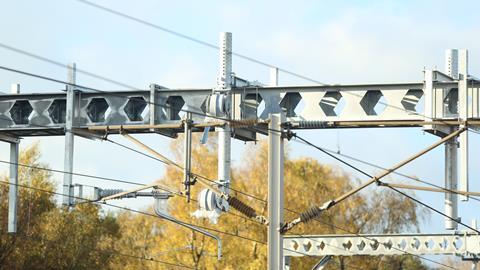
UK: Network Rail has begun preliminary market engagement for a framework contract for a planned programme of 25 kV 50 Hz electrification in Scotland as the first works are getting underway for the partial electrification of the Borders Railway.
The Scotland’s Railway Electrification Framework is intended to support the efficient and consistent development, installation and entry into service of railway electrification to support decarbonisation ambitions.
Network Rail intends to appoint one contractor for the delivery across Scotland of electrification based on UK Master series designs. The nil value NR30 Framework Commission Agreement would run from March 1 2027 to February 29 2032 with a possible extension to February 28 2035.
The works currently intended to be awarded under the framework agreement are valued at around £300m, with works which are not yet identified but which may become necessary potentially taking the total to £450m.
The tender notice is expected to be published on March 9.
Borders Railway electrification
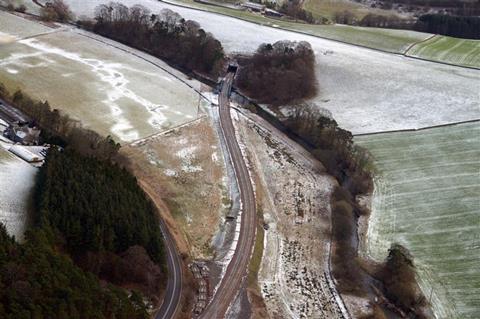
Meanwhile, on February 21 Network Rail is to begin first stage of works to partially electrify the 48 km Borders Railway between Edinburgh and Tweedbank. This follows the Scottish government’s confirmation in September of £342m of funding to electrify 140 km of railway in Fife and the Borders and to procure 69 electric and battery-electric trains by 2031.
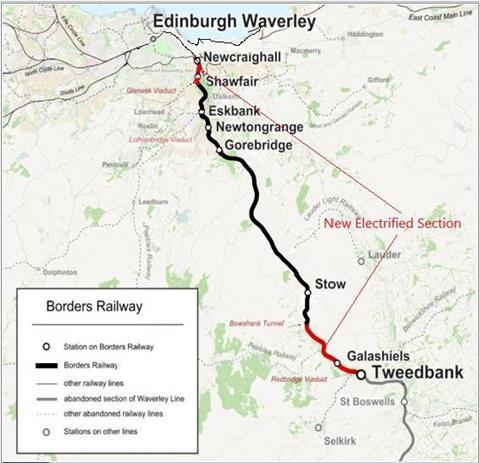
The Borders Railway will have two sections of electrification, one between Newcraighall and Shawfair at the Edinburgh end of the route and the other being a standalone section of overhead from Bowshank Tunnel to Tweedbank station.
Lynsey Maclean, Scheme Project Manager at Network Rail Scotland, said the line had been ‘rebuilt with future electrification in mind’ when it reopened in 2015, ‘which means we can deliver this work with far less intrusive engineering than is required on many older parts of the network, where we often need to lower track or raise bridges. The infrastructure here is already suitable for this next stage of modernisation.’
Mark Ilderton, ScotRail Service Delivery Director, said electrification ‘is an important step in paving the way for new, greener trains and delivering a more modern railway for the communities we serve. These early works mark real progress towards introducing new trains, which will offer customers a quieter, smoother, and more environmentally sustainable journeys along the route.’
Revised decarbonisation strategy
In November 2025, the Scottish government issued a revised rail decarbonisation plan that shifted the focus away from electrification of infrastructure to emphasise reduction of emissions from rolling stock.
The previous plan had been to electrify an average of 130 track-km/year and achieve full decarbonisation of passenger rail services in Scotland by 2035, but the revised plan aims to ’deliver decarbonisation in a proportionate way that achieves best value for the public purse’ by 2045. This is likely to encompass electrification of inter-city and suburban routes, but other options such as battery or hydrogen-powered trains to be considered for rural routes.