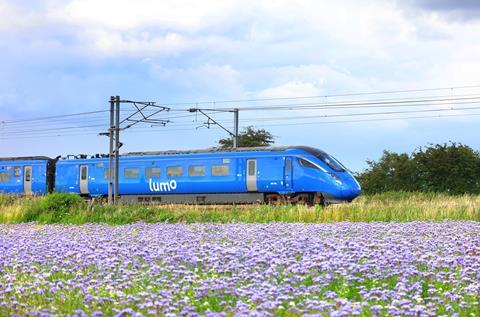
UK: The Department for Transport has written to the Office of Rail & Road to stress the ‘critical importance’ of considering the cumulative financial and performance impact when deciding whether to approve applications to run open access passenger services.
In an ‘official sensitive’ letter to ORR dated June 20, Richard Goodman, Director-General for Rail Reform & Strategy at DfT, reiterates that the Secretary of State’s position is that there will remain a place for open access services. However, they must ‘deliver benefits without undue cost to taxpayers or existing passengers’, and ‘genuinely add value and not simply divert revenue from existing operators’ or inhibit the efficient operation of the network.
Noting the influx of applications as owning groups focus on open access as the operation of contracted services passes to the public sector, DfT said it had ‘a number of questions and concerns’ about abstraction, capacity on congested sections of line, performance and the impact on the passenger experience.
DfT said ORR has previously focused on individual applications in isolation, and considered absolute abstraction rather than the cumulative effect. DfT suggests that the total annual abstraction of the current open access application would be up to £229m, which would ‘materially affect the funds available to the Secretary of State’.
The department is also concerned that there could be a conflict of interest between owning groups’ contracted operations and their open access arms as their contracts approach their end, which could ‘lead to a poorer overall experience for passengers and further reduced value for taxpayers’.
DfT says that as the ‘directing mind’ of the industry, the future Great British Railways will have the ability to specify services to maximise economic benefits and provide new links for under-served communities in a way that is not currently possible. It urges ORR to ensure that decisions made now will complement GBR’s role and future abilities, rather than offering ‘short-term benefits at the cost of significant long-term constraints’.
Supporting documents
Click link to download and view these filesDfT letter to ORR
PDF, Size 0.23 mb