President Macron has promised ‘a decade of the TGV’ in the 2020s, and work is due to start soon on three more high speed lines. Toma Bačić investigates.

More than 40 years have elapsed since France opened the first section of its Paris – Lyon TGV line, sparking a major shift in the pattern of inter-city rail travel across Europe. TGV services run by national passenger operator SNCF Voyageurs now reach most major French cities, but it is on the core Paris – Lyon route that a fundamental change in the market has come about.

This is the arrival of Trenitalia as an open access competitor in the domestic high speed market. Last December the Italian operator launched a twice-daily Paris – Milano service using Frecciarossa trainsets adapted for use on the French network, following this with its first domestic French open access services on April 5.

Starting with a single round trip between Paris-Lyon and Lyon-Perrache, Trenitalia is due to add two more return workings on June 1. This strikes right at the heart of SNCF’s core high speed market. The Italian trains are designed to attract customers by offering three classes of accommodation, various catering services and a relatively flexible ticketing policy.

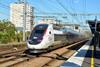
SNCF Voyageurs will doubtless counter this with its own commercial incentives for passengers, but another tool in its armoury will be a brand-new fleet of high speed trains. An initial glimpse of what will be on offer should have come on May 20 when the first of the 100-strong TGV-M fleet was due to be unveiled at Alstom’s La Rochelle plant, but the launch was postponed at short notice. Two pre-production sets are being built, one with seven trailer cars and the other with nine. These are due to enter service in 2024.

More LGVs in prospect

Last September President Emmanuel Macron used the backdrop of a full-scale TGV-M mock-up at Paris Gare de Lyon to announce a revival of the LGV construction programme. This had been on hold since July 2017 when the president, speaking at the inauguration of LGV Sud-Europe Atlantique and LGV Bretagne-Pays de la Loire, declared that it was time for a pause so that attention could switch to regional and local projects. Heralding the 2020s as ‘the decade of the TGV’, Macron confirmed at Paris-Lyon that €6∙5bn would be invested in three more TGV projects benefitting southern France.

Concrete evidence that the LGV construction programme is indeed active again came on March 2 this year when laws were passed by the Council of Ministers, paving the way for public corporations to be set up to finance three high speed lines. Each corporation will be run by representatives from the régions, départements and local authorities in the communities to be served, their main role being to raise funds to build the lines.

First to be built will be the Bordeaux – Toulouse route known as Grand Projet Ferroviaire du Sud-Ouest, which will eventually include a branch running southwest towards Dax, Bayonne and the Spanish border at Hendaye. It will be followed by the Montpellier – Perpignan route and the Ligne Nouvelle Provence Côte d’Azur between Marseille and Nice.

Bordeaux – Toulouse

Plans for the 222 km Bordeaux – Toulouse high speed line were first drawn up in the late 1980s, and a Declaration of Public Utility was granted by the Conseil d’État in June 2016. Yet only now are preparations being made for construction to start — this is likely to be late in 2023 or early in 2024.

In March, former Prime Minister Jean Castex announced that the 320 km/h line would open in 2032, allowing the Paris – Toulouse journey time via Bordeaux to be cut to 3h 10min. The line will include intermediate stations at Agen and Montauban, with another station planned at Mont-de-Marsan on the branch towards Dax.

The project has a price tag of €14bn, and around 40% of the cost will be funded by the government. Local communities are expected to contribute another 40% and the remaining 20% will come from the European Union.

Along the Côte d’Azur

A high speed line along the Côte d’Azur was first planned during the 1990s, but since then the project has undergone many iterations. Public consultations during the early 2000s led to further studies and the scheme as now proposed bears little resemblance to the original plan.

Government approval was finally granted on March 4 2019 and on February 28 2022 Transport Minister Jean-Baptiste Djebbari signed off a €3∙5bn financing protocol. Construction is scheduled to start in 2024.

The current proposal is broadly focused on rebuilding and modernisation of the existing railway along the Mediterranean coast between Marseille, Toulon and Nice, and the available funds cover the first two phases of the scheme.

In the first phase, due for completion by 2030, the railway will be remodelled in the Marseille and Nice areas, while infrastructure enhancements will allow the development of a dedicated commuter network for Toulon. Major work will include the construction of an underground through station below Marseille Saint-Charles and a redesign to eliminate conflicting moves between eastbound and westbound trains. In Nice a new airport station will be served by both regional and high speed trains.

During the second phase in the 2030s new sections of line will be built between Aubagne and Toulon and between Le Muy and Vallée de la Siagne. These will follow the previously proposed inland route for a direct high speed line.

TGV_02

Currently more than 80% of seats on SNCF high speed services are on double-deck trainsets; the first TGV Duplex was delivered to SNCF in February 1995.

These improvements are expected to contribute to a projected 36% increase in ridership by 2035. This will be partly driven by the introduction of more frequent TER services as planned by Transdev, which was selected last year as the concessionaire for regional services along the route.

Montpellier – Perpignan

A memorandum of understanding setting out how the first phase of the Montpellier – Perpignan mixed-traffic high speed line will be funded was signed in Narbonne on January 22. This provides for Occitanie region and 10 other local authorities to contribute €816m towards the total cost.

The 150 km line is to be built in two sections. The 52∙3 km Montpellier – Béziers section with 7 km of connecting lines is due to open in 2030. Its completion will allow the timings for direct trains between Montpellier and Narbonne to be cut by 18 to 22min.

The 97∙7 km section from Béziers to Perpignan includes two new stations and 23 km of connecting lines. This is to be built solely for passenger services, offering a 39min journey time saving between Montpellier and Perpignan when it opens around 2040.

Other projects

Although there is as yet no clear picture for the funding of further projects, several more LGV schemes have been revived.

One is an extension of the Le Mans – Rennes LGV that opened in July 2017. Envisaged for completion around 2035, the project is currently at the stage of preliminary studies in partnership with local authorities, leading to a public enquiry in 2027. Objectives include improving speed and capacity on the Rennes – Nantes route and cutting the journey time from Paris to Brest and Quimper to 3h or less.

Also in the medium-term frame is a high speed corridor from the Paris area to Normandie. Intended to alleviate congestion on the existing main line, this would consist of sections of new alignment from Paris to Mantes-la-Jolie, Mantes-la-Jolie to Evreux, Rouen to Barentin and Barentin to Yvetot. A new station would be built at Rouen Saint-Sever. In the longer term extensions could be built towards Caen and Cherbourg.

Proposals exist for two further projects in Île de France. One was initially promoted as a new line from Roissy-Charles de Gaulle airport to Picardie, but this been much cut down to just 6∙5 km of double-track alignment from Vémars at the northern end of LGV Interconnexion to Marly-la-Ville on the Paris – Creil main line, plus upgrading of the line from Creil to Amiens.

To the south of Paris, there has long been a proposal to link LGV Atlantique with LGV Sud-Est. Current plans envisage an upgrading of the existing line between Massy and Valenton, but a long-term option would entail construction of a new line costing between €2bn and €4bn.