UK: Long-distance passenger train operator CrossCountry has unveiled the first of its 70 Voyager inter-city diesel-electric multiple-units which are being refurbished by Alstom in a £75·1m programme funded by leasing company Beacon. Andrew Grantham reports from Derby.
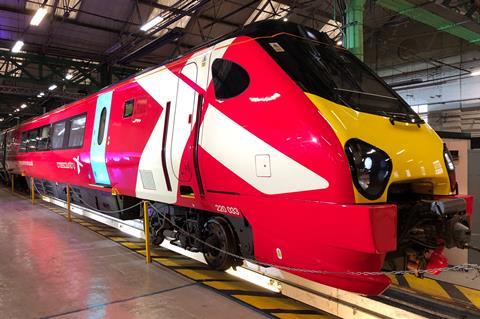
Speaking at the roll-out of the initial unit on February 10, the operator’s Managing Director Shiona Rolfe said the Bombardier Transportation-built 200 km/h class 220 and 221 DEMUs had been ‘the backbone of CrossCountry’s long distance network for more than two decades, they’ve been carrying millions of people, connecting cities, connecting regions, businesses, families and communities. But just as the railway is evolving, so must our trains.’
She said the aim of the refurbishment was ‘really simple: to make time spent onboard more pleasurable, more productive and frankly more relaxing’ and to ‘create a space for today’s journeys, whether business or leisure, a short hop or even a long tour’.
The refurbishment was also ’a statement of confidence in the future of CrossCountry’, she added. ’By investing in our existing trains, we are making a practical, responsible commitment to sustainably extending their life.’
Refurbishment project
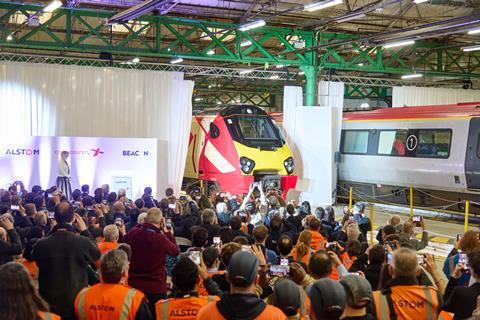
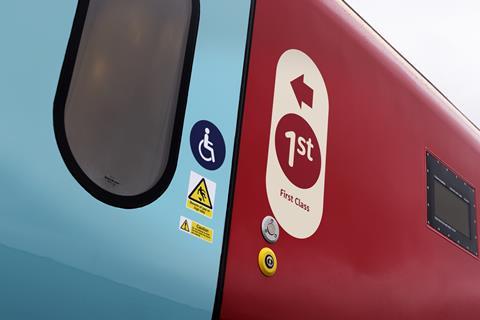
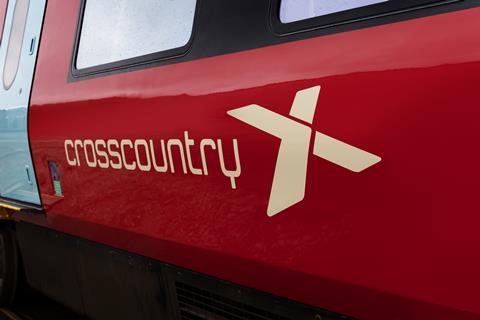
Rolfe said the refurbishment aimed to meet ‘modern expectations for comfort, sustainability and security’. The work being undertaken by around 130 Alstom staff in Derby includes a full interior refresh, as well as an exterior repaint to provide a ‘modern and consistent’ look throughout the fleet.
Chris Nesbitt, Fleet & Contract Manager (Voyager) at CrossCountry, told Rail Business UK that it was a ‘customer-facing’ refurbishment. The project did not include mechanical works, and Steve Harvey, Alstom’s Services Director UK & Ireland said the Voyager fleet was already one of the most reliable in its sector.
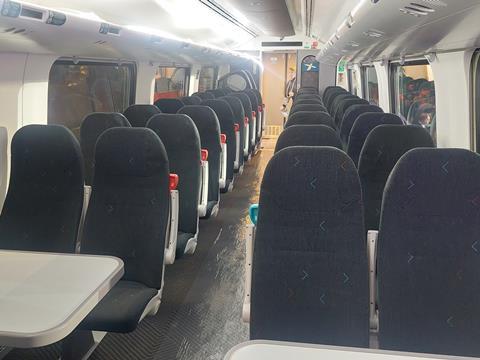
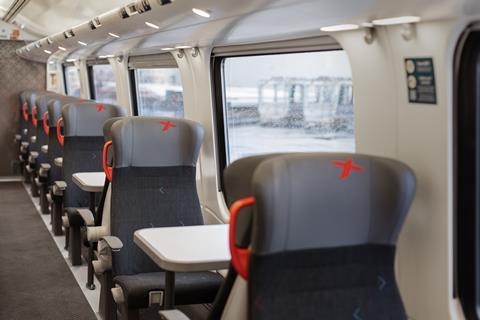
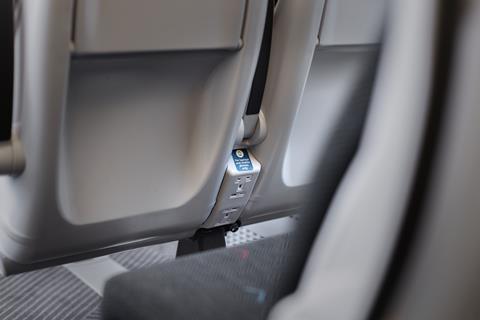
The most visible interior change is the installation of new seats from Fisa. These have a standard shell from the manufacturer but bespoke cushions. They also have integrated three-pin, USB-A and USB-C power sockets. There are upgraded tables at all seats.
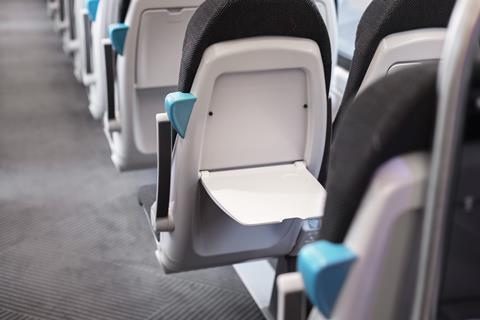
While the seat spacing is the same as before, CrossCountry said the changes offered increased legroom and improved under-seat storage. Keeping the number of seats the same as before would also avoid the significant cost which would be involved in changing the built-in electronic seat reservation system. The seats have coloured grab ‘ears’; asked about reports that these could cause problems for catering trolleys, CrossCountry assured Rail Business UK they were now ‘gauge cleared’.
There is refreshed interior and exterior artwork, and new carpets from Axminster throughout.
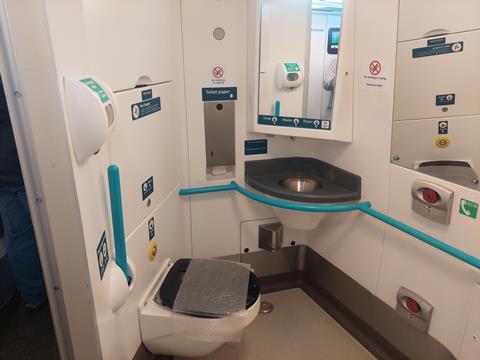
The toilets have been refurbished. New LED lighting is expected to reduce power consumption.
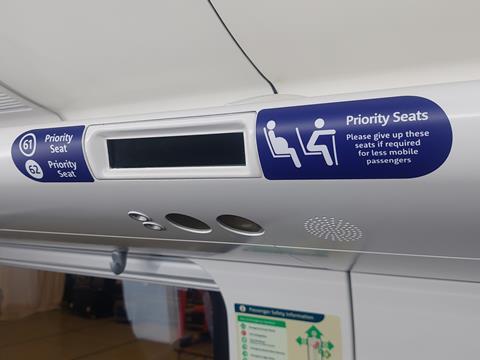
The trains were built with air-conditioning and information systems, which were not universal amongst vehicles in service when they were designed. The information displays have been retained, as the twin-leaf interior doors mean there is space on the bulkheads for larger modern screens.
CrossCountry said the Voyagers were one of the last fleets to be built before onboard CCTV became standard. Equipment from Journeo is now being fitted to ensure a safer environment for both passengers and staff. Forward-facing cameras are also being installed on every set, along with automatic passenger counters from Journeo which will provide more real-time data than that provided by the small pool of six sets which currently have it.
Refurbishment timescale
Beacon’s CCO Rob Dee said the Voyager fleet had been the leasing company ‘s first major investment in the UK in 2017, and ‘at the time of purchase, Beacon was more than aware that the fleet had not seen any real investment since introduction. The need for that investment was a key consideration when we bought the fleet; we acknowledged we needed to invest.’
Initial planning with Alstom’s Ilford site in London covered refurbishment of the fleet of units then operated by Avanti West Coast. Beacon had hoped to continue that programme with the CrossCountry fleet, ‘however, Covid and a couple of short-term leases got in the way’. It was not until 2023 that detailed planning was able to start as part of Arriva’s negotiations to operate CrossCountry under a National Rail Contract. ‘From that, we formed a view of what was needed and what was right for this fleet, most importantly, what was right for CrossCountry in terms of comfort environment and customer offering’, Dee explained. The refurbishment contract was finally agreed in 2024.
Work on the first unit took some time, as CrossCounty and Alstom needed to gain an understanding of how the trains had aged and what would be required; CrossCountry said corrosion of the steel bodies was in line with what would be expected in trains of this age.
The first refurbished trainset is expected to re-enter service by the end of February, with the second following not long afterwards. The series refurbishment of the rest of the fleet will be completed more rapidly, with one trainset leaving service and a refurbished one returning to service each Saturday from April.
The trainsets transferred from Avanti West Coast will be last to be done, as these had already undergone refurbishment. They will also need more extensive changes to make them identical to the rest of the CrossCountry fleet.
The fleet sees intensive use, with some diagrams covering more than 1 600 km a day. The first trainset to be refurbished (220 033) has so far clocked up 9 352 872 km — equivalent to going to the moon and back 12 times. Harvey said ‘upgrading a fleet as intensively used as the Voyagers demands precision, innovation and deep technical knowledge — and our people have delivered exactly that.’
Alstom is exploring options to recycle waste material from the refurbishment process, as part of its aim to send no waste to landfill.
Past hopes of retrofitting batteries or covnerting the Voyager fleet to electro-diesel operation conversion have long been abandoned. However, the trains do make use of an engine management system which aims to reduce fuel use by switching off individual engines when not required. This currently takes into account power requirements between station stops, and CrossCountry is looking at improving the granularity of the system to further increase efficiency.
- Arriva’s National Rail Contract runs to 2031, with a break point in October 2027 after which it can be terminated by the Secretary of State with three months’ notice. As such, it is likely to be the last DfT-contracted passenger train operator to be renationalised.