UK: The formation of Great British Railways offers an opportunity to codify and enhance the experience of rail replacement transport, according to ground transport and accommodation company CMAC.

A subsidiary of Singaporean transport operator Comfort DelGro, Accrington-based CMAC has developed a portfolio of activities across corporate transport and accommodation services, but the co-ordination of rail replacement buses and coaches is a core element. This was reflected in the company’s decision to brand this activity as Great British Rail Replacement, a canny take on the UK government’s ongoing rail reform programme.
Rail replacement is difficult
‘It’s too easy to tell people not to travel’, says Ian Jeffrey, GBRR Director at CMAC. ‘My personal perception is we see more of those Do Not Travel notices from the state-owned operators’ when major disruption strikes, he adds, because organising replacement transport remains a fraught task, especially at short notice. In this regard, Jeffrey points to the contrasting approaches of Avanti West Coast and DFTO-owned TransPennine Express in the recent closure of Glasgow Central station, where he says ‘Avanti took the lead, operating the normal Glasgow Central timetable to and from Motherwell. TransPennine Express suspended their Glasgow services completely’.
Nevertheless, he recognises the increasing challenges facing the exacting task of managing disruption, whether this is a short term response to a railway incident or a long-planned blockade of a key rail hub. ‘You are very lucky if there are enough buses, coaches or drivers freely available when an incident occurs. It’s very unlikely.’
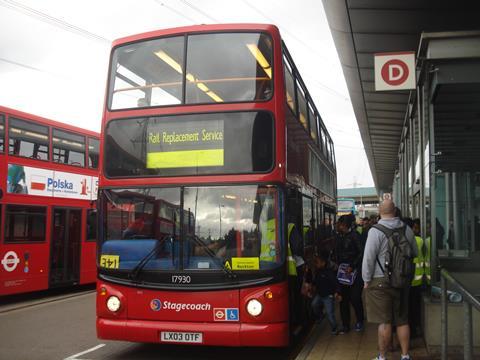
Although a niche segment of the bus and coach industry, rail replacement faces all the same challenges that loom over the rest of that industry. Jeffrey stresses that while the term ‘rail replacement bus’ is now common parlance in Britain, this masks an important distinction, which even policymakers have been known to overlook.
‘The fact is, about 80% of rail replacement buses are not actually service buses — they are standard 53-seat coaches.’ This matters, because the accessibility levels of the two vehicle classes are starkly different. ‘Buses have had to be fully accessible since around 2000, and almost all of them are today. But in the coach market, that is not the case.’ This has led to particular challenges in rail replacement, when passengers are met with vehicles that may not be suitable for everyone travelling. Jeffrey says that ‘parallel running’ involving a mix of accessible and non-accessible coaches is still commonplace.
Ministerial intervention
While the coach market is now seeing more vehicles with step-free access on the road, more recent accessible information legislation requires introduction of audio-visual services to keep passengers updated on their journey. Jeffrey says that the number of coaches complying with both sets of standards amounts to only around 10% of the overall fleet typically used for rail replacement provision.
Nevertheless, this has not stopped ministers from insisting that no non-accessible vehicles will be used on any rail replacement service after the end of July 2026. Further muddying the regulatory waters is the fact that private hire vehicles are not subject to any accessibility regulations at all, according to Jeffrey — although the number of small family-run coach firms managing one or two vehicles continues to dwindle, he adds.
He explains that some work is seemingly underway within the DFTO-owned operating businesses to create a framework that could support a more unform approach to the delivery of rail replacement services. ‘That will provide a template by which other operators could also benchmark their services.’ But he warns that ‘the industry is still not in a stable position’ either in terms of access to vehicles or to staff.
GBRR ‘manifesto’
Jeffrey suggests that the launch of GBRR has helped to raise the issue of rail replacement services up the agenda ‘a little’. But as the GBR legislation makes its way through parliament, CMAC has issued a white paper with what it sees as 10 ‘key actions’ that could improve provision as part of the reform agenda. The company has also published an accompanying report looking specifically at the accessibility issue.
The company says these ‘provide a practical charter for transforming rail customer experience during disruption’, and are based on extensive surveys of rail users and sector stakeholders. The 10 points are:
1. Deliver consistent, high-quality rail replacement services through co-ordinated procurement. Centralise procurement where feasible to improve service reliability, consistency and value, while ensuring fairness, transparency and the avoidance of conflicts of interest.
2. Put customer service before price. Procurement of replacement services should prioritise customer satisfaction and experience, not just lowest cost. Contracts should include clear service-level standards and customer-focused KPIs, and consideration should be given to offering discounted fares for journeys where rail replacement transport is needed.
3. Introduce a national rail replacement standard. Establish a Rail Replacement Quality Mark with defined operational, accessibility and service criteria, monitored via independent audits. This standard should set consistent expectations across the network for information delivery, accessibility, vehicle quality, staff training, performance metrics and contingency protocols.
4. Ensure every touchpoint is customer-ready. Rail replacement staff and service providers must receive customer-focused training including real-time problem solving, communication, and accessibility awareness. Training effectiveness should be regularly evaluated.
5. Plan works with the customer in mind. Use real customer data to plan engineering works, schedule replacements outside peak hours where possible, and coordinate across operators to reduce disruption.
6. Operate as one team. Establish co-ordinated briefings and shared operational updates involving station staff, replacement service providers, and transport co-ordinators to deliver a seamless customer experience.
7. Make accessibility an industry priority. Co-design services with disabled customers, mandate accessible vehicles, provide step-free routes and ensure visibility of accessibility information at all stages of the journey.
8. Serve rural areas better. Collaborate with local transport partners to ensure signage, communication, and reliable replacement options in rural areas.
9. Invest in digital tools and smart information. Provide real-time updates, integrated journey planning, accessibility visibility and support tools for disrupted rail customers. Apps and systems should complement, not replace, staff guidance. Adopt scalable, technology-enabled service models to ensure digital tools can grow with demand and deliver consistent, reliable information across the network.
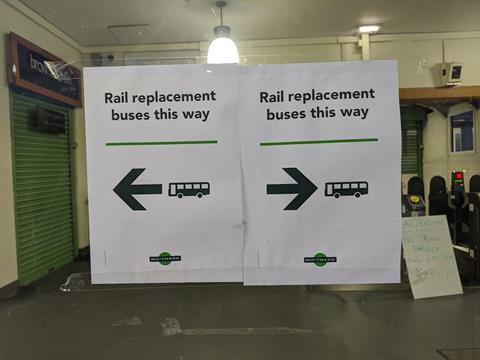
10. Brand rail replacement clearly. Ensure vehicles, pick-up/drop-off points, and station signage are clearly marked, recognisable, and accessible. This includes tactile and high-contrast signage, audible announcements and trained staff available to guide customers who are blind or partially sighted. Consistent, inclusive branding improves confidence, reduces confusion, and ensures all customers can navigate replacement services safely.
Supporting documents
Click link to download and view these filesCMAC Rail Disruption White Paper
PDF, Size 23.73 mb