UK: The creation of Great British Railways provides a ‘golden opportunity’ to take ‘a radical new approach’ to tackle the boom and bust investment cycles which create damaging uncertainty for the railway supply chain, according to House of Commons Transport Committee Chair Ruth Cadbury.
The Committee’s Rail Investment Pipelines: Ending Boom & Bust report published on February 10 says ‘the message from the rail industry has been clear’: that ‘uneven and uncertain funding and procurement’ has been putting the viability of employers including SMEs at risk and delaying improvements to the network.
The report says spending needs to be ‘steady, carefully sequenced and clearly communicated’ if it to deliver the best results for passengers and the economy.
The Committee found that private sector investment in rail assets has been hindered by a failure to identify where it would be welcomed and the lack of a ‘clear, credible’ pipeline of projects. There is also a need for a framework to allow regional and mayoral authorities to identify where funding, priorities and business case processes can be aligned.
The Committee says ‘industry experienced significant disruption to volumes of work and continuity of contracting’ at the beginning of regulatory Control Period 7, and recommends that the government commission an independent review which would compare this to previous control periods and consider whether better management could smooth the flow of work.
The report says the Rail Network Enhancements Pipeline was a ‘sound idea’, but ‘undermined by a chronic lack of updates and by poor decisions to add immature or unfunded projects to the list’. The Committee believes it should be updated to provide the basis for mature, informed communication.
Rolling stock strategy needed
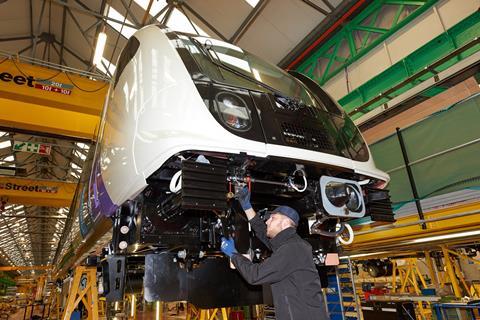
The committee found ‘widespread agreement, including from the government’ that the lack of a long-term rolling stock strategy has resulted in damaging missed opportunities. It says the publication of a rolling stock strategy in 2026 is urgent, and the must be clearly aligned with major projects and enhancements so that decisions about track and trains can be taken in a co-ordinated way.
The Committee says DfT should set out a clear intention to limit the proliferation of rolling stock types, and within two years DfT and Great British Railways should define a small number of standard train families.
Damaging uncertainty
Commenting on the report, Railway Industry Association Chief Executive Darren Caplan said RIA ‘has been arguing for a clear and visible pipeline of work to be published ever since the Rail Network Enhancements Pipeline was launched in 2019, so we welcome the Select Committee’s recognition of the “damaging uncertainty” this has caused to the UK rail supply chain and the need for clarity to plan and invest’.
He said ‘we look forward to seeing more details of the government’s detailed plans for rail reform and future investment models which will allow rail suppliers to plan and invest for the future’.
Sam Gould, Director of Policy & External Affairs at the Institution of Civil Engineers, welcomed the report, adding that ’clarity about what’s going to happen and when is essential to guide the industry. Without a clear picture to work with, it’s difficult to do effective workforce planning, which impacts delivery. For the benefit of the public, and the wider economy, the government must define its overall vision for transport in England in the Integrated National Transport Strategy.’