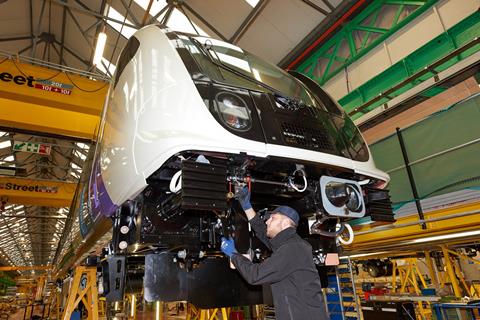
UK: The railway supply industry has welcomed a House of Commons Transport Committee report into the skills needs of the train, motor vehicle, bus, aircraft and ship manufacturing sectors in England, which says rail reforms provide ‘once-in-a-generation opportunities’ for the rolling stock manufacturing sector.
The report Engine for growth: securing skills for transport manufacturing, published on January 28, says vehicle manufacturing provides high quality, well-paid work and makes a significant contribution to the economy, as the UK can supply both domestic and export markets. However, the Committee says the government must address skills shortages, and the Department for Transport needs to co-ordinate its efforts with the departments for Business & Trade, Education & Skills, Work & Pensions, and Energy Security & Net Zero as well as the Cabinet Office.
Rail industry input on skills
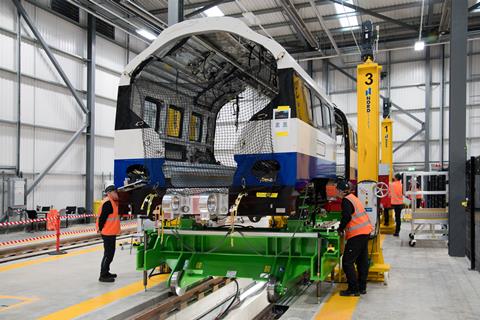
The Committee’s inquiry took evidence from organisations including Alstom, Angel Trains, Logistics UK, the National Skills Academy for Rail, the RMT trade union, Rail Forum, the Railway Industry Association, Siemens Mobility, Transport for London and Transport UK Ltd.
It heard that the vehicle supply sector faced major challenges that were common across advanced manufacturing. Not enough people are entering the sector, and there is a significant retirement ’cliff-edge’ looming over the next decade. Meanwhile, the skills mix needed is evolving, with rising demand for advanced knowledge at every level driven by automation and AI, digitalisation and transitioning to net zero.
The Committee said work was needed to address outdated and negative perceptions of manufacturing, including engaging with primary schools to avoid children being put off STEM subjects when young.
Transport Committee Chair Ruth Cadbury said ‘DfT should start by doing a deep dive to establish whether the UK’s vocational training system is cutting the mustard for young people, who are too often turning away from potentially lucrative and fulfilling careers in the transport manufacturing sector’.
Alstom suggested that the UK might learn from other countries, highlighting collaboration between government, industry and academia in France and Germany’s dual vocational training system. This integrates practical and theoretical learning to ensure skills are directly relevant to industry needs and provide stable career paths.
The Committee recognised that skilled workers faced significant barriers when trying to move between different areas of transport manufacturing, suggesting that Skills England should consult on the potential benefits of a ‘competency passport’.
RMT General Secretary Eddie Dempsey advocated for an industry-wide apprenticeship scheme, citing a Network Rail programme which provides hands-on experience, structured learning and nationally recognised qualifications. Dempsey suggested that such a scheme ‘could be a single point of entry into the railway industry, giving people both the generic, transferable and specialist skills that allow them to move around the rail industry, but also in other high-tech manufacturing-type roles’.
Rail sector responds
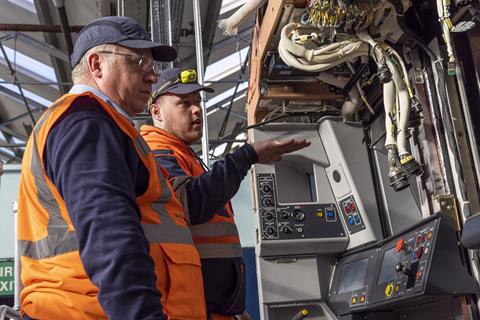
RIA said it welcomed the report’s recognition that transport production fell within the Advanced Manufacturing branch of the Industrial Strategy. Policy Director Robert Cook said ‘we urge government to acknowledge this in debates going forward and ensure that rail manufacturing is not left out in conversations about the Industrial Strategy.
‘We urge the government to use this report as an impetus for supporting the rail manufacturing sector, particularly to ensure the UK retains a world class skilled workforce that will support an efficient railway, global exports and high quality jobs across the country.’
Rail Forum CEO Elaine Clark welcomed the report on behalf of the organisation’s 400 supply chain members, saying it was ‘pleased to see the Transport Committee urge the government “to go as far as possible towards supporting public procurement from British manufacturers”’.
Rail Forum called on DfT to act on the recommendations. ‘The call for Skills England to work closely with the manufacturing sector to review current and future skills requirements is welcome’, said Clark. ‘As new technologies and materials come on stream at an ever-faster rate this will be essential to ensure greater alignment of technical education with the needs of industry’, necessitating that vocational training is more relevant and focused on fast-evolving needs. A mechanism that would enable skilled workers to easily transfer between businesses would help minimise the loss of highly-trained expertise during sector-specific shortfalls in activity.
Rob Whyte, Managing Director UK & Ireland at Alstom, said ‘anchoring intellectual property and advanced manufacturing capability in the UK ensures we remain a technology maker rather than a technology taker. Sustaining this position in rail requires a visible and fully funded pipeline across all asset classes. Such certainty enables the supply chain to invest ahead of demand – developing people and skills, expanding facilities and driving innovation – ultimately improving delivery, resilience and value for money.’
Siemens Mobility told Rail Business UK that ‘there needs to be five-year, fully funded funding periods as part of GBR and this needs to include enhancements and rolling stock. This is important in enabling us to continue investing, like we are in two of our manufacturing facilities, in Goole with up to £240m and Chippenham with £100m. This allows us to contribute to UK plc and bring the right skills needed for rail projects and manufacturing.’
‘Young people are ready to step up’
Bonnie Price, CEO of the Young Rail Professionals networking organisation, said ’this report reinforces what young people and early-career professionals have been telling us in the years post pandemic: skills policy must be long-term, joined-up and rooted within industry forecast. Transport manufacturing cannot be an engine for growth unless we invest in the people who will design, build, operate and maintain our networks for decades to come.
‘Young people are ready to step up. What they need is consistency, visibility and long term commitment from an industry they want to be a part of. With record numbers of young people unemployed, co-ordinated action across government departments, stable funding for skills programmes, and meaningful engagement with early-career voices when policy is designed and implemented is the way forwards.’
YRP said it stands ready to act as a bridge between policymakers, employers and early-career professionals, to share insights from more than 6 000 YRP members across the UK and Ireland. Price said the organisation can support industry-wide campaigns to promote transport manufacturing as a modern, innovative and socially valuable career and champion best practice in mentoring, development and progression for the next generation of transport leaders.