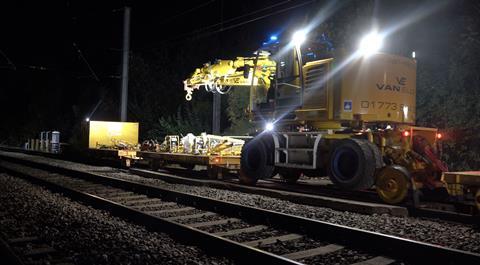
UK: The effectiveness and safety of using Virtual Worksite Marker Boards instead of physical marker boards was successfully trialled during engineering works on the East Coast Main Line over the August bank holiday weekend.
The technology has been developed by geofencing specialist Tended, and was tested in partnership with Siemens Mobility and Network Rail.
Geofences were drawn around the safe work limits of the site between Biggleswade and Potters Bar, and on-track plant operating within the possession was fitted with in-cab devices providing real-time alerts to operators as they approached the worksite boundary.
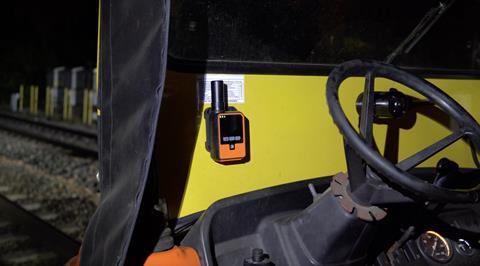
Tended says that the early results validated the expected efficiency and safety benefits.
During the works, a third party that signed into the worksite had issues which delayed the possession handback and the normal operational service by 18 min. The Engineering Supervisor estimated that if physical WSMBs had been used, this possession overrun was likely to have been between 43 and 68 min, causing a more substantial impact to the start of service. Network Rail valued the cost saved at a minimum of £130 000.
Tended estimates that wider use of VWSMB could deliver cost savings of more than £23m per year.
The trial follows recent approval for a deviation to the Rule Book, granted by RSSB’s Traffic Operation & Management Standards Committee, to allow virtual worksites to be tested in a live environment.
‘Virtual Worksite Marker Boards present a significant opportunity for the industry, and it was exciting to deliver the very first full trial’, said Phil Sadgrove, Senior Implementation Manager at Tended. ‘Working closely with Network Rail to develop the solution, and with Siemens who continue to be a champion of our technology, means we are now able to demonstrate the value of geofencing through VWSMB to the industry as a whole.’