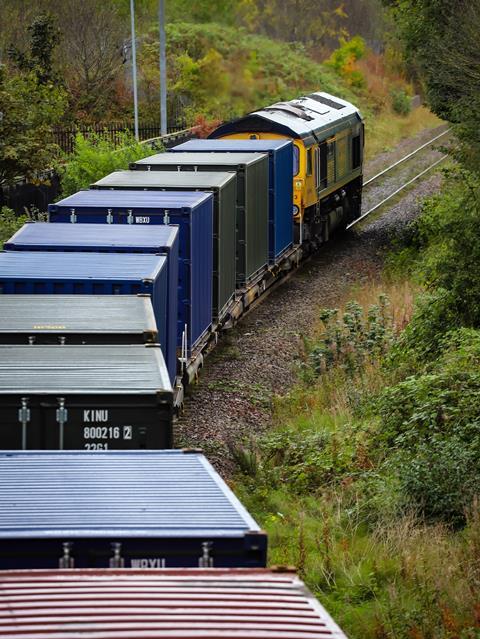
UK: The rail freight sector has welcomed the publication of the government’s railway reform bill, but concerns are being raised about capacity allocation, regulation and the risk that Great British Railways might focus on its own nationalised passenger services at the expense of freight, which will remain in the private sector.
Commenting on the introduction of the bill to parliament, Rail Freight Group Director General Maggie Simpson said ’we welcome the commitments for a statutory duty to promote freight, and the requirement for a freight growth target to be set by the Secretary of State. These are essential to ensuring rail freight will be a success under Great British Railways.
‘However, our members remain concerned over the planned legal changes to create a new capacity allocation and timetabling process. It is essential that GBR offers capacity for freight through a fair, transparent and consistent process which offers long term certainty for customers and operators, with an effective and strong right of appeal.’
The Chartered Institute of Logistics & Transport said there was a lack of detail on how freight would be integrated within the new structure. It said freight users need greater capacity and reliability, and called for ‘clear leadership, accountability and strong collaboration across the industry’, while also ensuring that innovation, local responsiveness and competition are preserved.
CILT (UK) wants to see a long-term national rail strategy that offers stability for freight, including a published growth target to support a shift from road to rail. It said devolved administrations need to work together as part of a coherent network, rather than as separate entities.
‘The success of Great British Railways will depend on achieving a balance between national co-ordination and local responsiveness, while preserving opportunities for innovation and competition’, said CILT(UK) Chair Anna-Jane Hunter. ‘There should also be a strong focus on balancing the needs of both freight customers and passengers, ensuring that each group is consulted, treated fairly and well supported.’
Business group Logistics UK said rail reform ‘must deliver equally for freight services and passengers’.
Senior Policy Manager Alexandra Herdman said there is a ‘major opportunity to grow freight as part of an integrated logistics system’, but there is a need to ’ensure there are adequate safeguards in place to prevent freight services being deprioritised with GBR in control of both infrastructure and passenger operations’.
Logistics UK said its members are concerned about a reduction in the role of the Office of Rail & Road, and called for the government to maintain a ‘proactive, independent role’ for the regulator, saying ‘an appeals-only model risks leaving freight operators dependent on retrospective dispute resolution. Independent oversight from the outset is essential.’