UK: The government has set out its £45bn ambition for the long-discussed Northern Powerhouse Rail programme to ‘drastically improve’ how people travel across the north of England for work, education and leisure, as well as its plans to study the potential for a further Manchester – Birmingham line.
‘For too long, the north has been held back by underinvestment and years of dither and delay — but that ends now’, Secretary of State for Transport Heidi Alexander said on January 14. ‘This new era of investment will not just speed up journeys, it will mean new jobs and homes for people, making a real difference to millions of lives.’
The government has given few firm details or timescales for the programme, but it has confirmed £1·1bn of funding from existing budgets which will progress planning and development work during the current Spending Review period running to 2029-30 .
First phase of Northern Powerhouse Rail
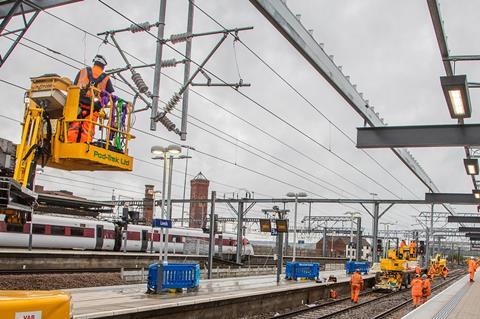
NPR would build on the £11bn Transpennine Route Upgrade programme which is currently underway between York, Leeds, Huddersfield and Manchester.
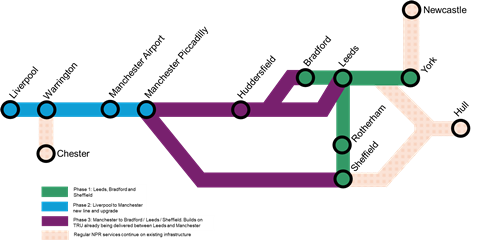
The first phase of NPR is to prioritise enhancement and electrification on the Leeds – Sheffield, Leeds – York and Leeds – Bradford routes, with delivery planned for 2030s.
There would be improvements at Leeds, Sheffield and York stations, which Alexander said would ‘reflect the prestigious place rail holds in the northern economy, and regenerate vibrant, bustling districts in these cities’. This aims to support regeneration plans to unlock tens of thousands of homes and jobs.
The plan also includes ‘pressing forward with work’ on a new Bradford station, augmenting the current Interchange and Forster Square hubs in the city centre. More than £11m of local transport funding has also been agreed for South Yorkshire to develop a new Rotherham Gateway station.
Further north, work on the business case for reopening the Leamside Line south of Newcastle is also to be taken forward.
Second and third phase plans
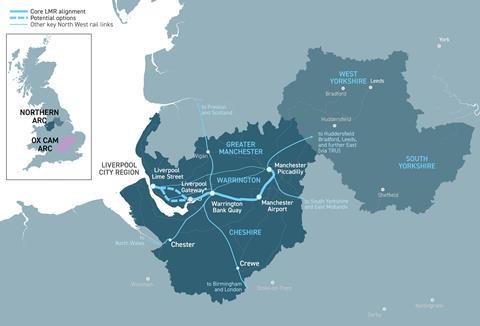
The second phase of NPR would include the construction of a new route between Liverpool and Manchester, including three new stations at Manchester Airport, Manchester Piccadilly and Warrington Bank Quay Low Level.
Work will begin immediately to develop the project plans and business case in more detail, with construction envisaged for the 2030s.
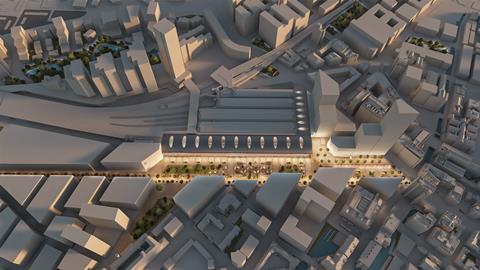
Greater Manchester’s leaders will work with government to consider their preferred options for an underground through station in central Manchester, enabling more reliable and quicker services to West Yorkshire and beyond and future-proofing the station to accommodate growing passenger numbers for decades to come. They also aim to ensure that the Manchester stations are integrated into the wider Bee Network of local transport services.
Improvements to Liverpool Lime Street and Liverpool Central stations are also being considered.
‘This new era of investment will reignite the economy across Liverpool and Manchester, helping their iconic sport and cultural industries to thrive, and cementing Manchester Airport as the gateway to the north’, said Alexander. ‘This exciting new line will not only speed up journeys, it will open up new jobs and homes for people, making a real difference to millions of lives.’
The third phase of NPR would focus on improved connections between Manchester and Sheffield, Manchester and Leeds, and ‘explore options’ for more rail infrastructure to be built from Manchester to Bradford.
North-south line to be studied
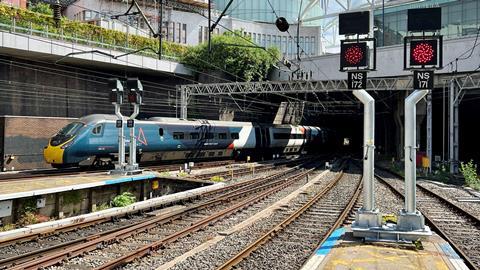
The government has also confirmed a long-term objective to build a new line from Birmingham to Manchester. DfT said this would ensure sufficient capacity and better connectivity on the West Coast Main Line, ‘but it won’t be a revival of HS2 Phase 2’.
The government will launch a feasibility study, working with local partners to look at what could be delivered, when and to what specifications. This would be an incremental programme, with improvements in the Northern Growth Corridor prioritised first. Land already purchased between the West Midlands and Crewe will be retained in the meantime.
Funding cap
An overall funding cap of £45bn will be set for NPR through to the 2040s, although no further details of allocations were announced.
DfT said that government would work closely with local partners to ensure planning processes are carried out efficiently and approvals are streamlined, learning lessons from HS2.
The government is also working with employers and local leaders to help fill local skills gaps for NPR, and colleges across the country will receive £570m to expand their training facilities.
Wider strategy
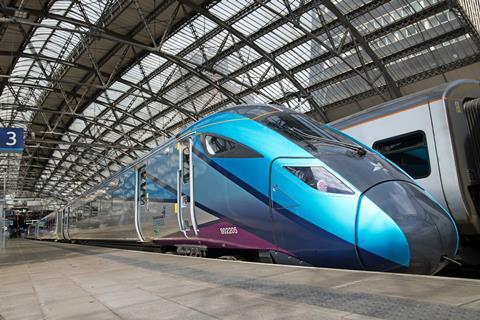
In its own statement, the Treasury said NPR would drive productivity and create tens of thousands of jobs by providing faster and more frequent services and ‘transforming commutes’ for Liverpool, Manchester, Warrington, Leeds, Bradford, Sheffield and York, with services running onto Newcastle and Hull.
NPR forms a central building block of a wider government strategy for northern England which is to be published this spring. This is to include plans for a northern growth corridor from Liverpool to York via West and South Yorkshire, which the Treasury said ‘has the potential to rival some of the most successful growth corridors in Europe, like the Rhein-Ruhr region in Germany and the Randstad in the Netherlands’.
Prime Minister Keir Starmer said ’over and over again people in northern communities, from Liverpool and Manchester to York and Newcastle have been let down by broken promises. This cycle has to end. No more paying lip service to the potential of the north, but backing it to the hilt. That’s why this government is rolling up its sleeves to deliver real, lasting change for millions of people through Northern Powerhouse Rail: a major new rail network across the north that will deliver faster, more frequent services.
‘This investment is proof we’re putting our money where our mouth is, working with local leaders to deliver the transport links that will help working people do what they need to in life – getting to work, taking the kids to school, or days out with the family.’