










Features & Analysis – Page 20
-
 In depth
Infrastructure: Connected workers inspect catenary
A novel workflow tool has been trialled by Network Rail on the East Coast Main Line in northeast England to combine the benefits of monitoring overhead lines using drones with the elimination of paper-based processes at the worksite.
-
 In depth
USA: Attracting shippers to freight rail
AAR subsidiary Railinc has developed an intuitive software platform aimed at making it easier for freight shippers to choose rail over other modes, as Product Manager Danny Dever explains to Nick Kingsley.
-
 In depth
Italy: Accelerating the national rail investment programme
Managing Director of Rete Ferroviaria Italiana Vera Fiorani and Enrico Giovannini, Minister of Infrastructure & Sustainable Mobility, have confirmed plans to meet sustainability targets and accelerate investment in railway infrastructure as part of Italy’s post-Covid economic recovery programme. Christian Scasso reports.
-
 In depth
Traction Technology: Are hydrogen locomotives the next big thing?
Several US and Canadian railroads have teamed up with suppliers to investigate the potential for hydrogen as an alternative to diesel traction for heavy freight operations. Dave Lustig investigates.
-
 In depth
Brazil: making more use of urban railways
Better utilisation of under-used main line railways is seen as key to developing cost-effective urban and suburban rail networks that can relieve road congestion in Brazil’s fast-growing cities. Benjámin Zelki investigates.
-
 In depth
Infrastructure: A change of track
Advances in turnout design, greater use of digital technologies and a strong focus on performance are helping to improve the capacity and reliability of Sweden’s rail network. Chris Jackson reports from Örebro.
-
 In depth
Canada: Generational change will transform travel
A multi-billion dollar investment programme will change the way people use public transport in Canada’s most populated area, with GO Expansion bringing frequent all-day electric train services to routes across the Toronto region.
-
 In depth
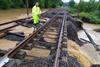
Infrastructure: Belgium learns to live with extreme weather
Infrabel CEO Benoit Gilson reflects on the devastating floods which paralysed the Belgian network in mid-2021, and explains how the infrastructure manager has started to adapt its operations and harden its assets to cope with the impact of extreme weather.
-
 In depth
Europe: Bringing unaccompanied freight to the UK through the Channel Tunnel
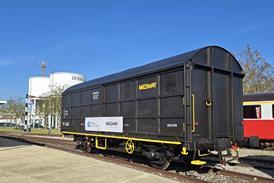
Channel Tunnel concessionaire Eurotunnel is planning new rail services to meet growing demand for the unaccompanied transport of lorry trailers between continental Europe and inland destinations in the UK, Christian Dufermont, Freight Commercial Director, Eurotunnel Le Shuttle Freight, tells Railway Gazette International.
-
 In depth
Signalling: OCORA aims at onboard simplification
This month is due to see the second release of the OCORA specifications being developed by an international working group to facilitate a standard ‘reference architecture’ for onboard Command Control & Signalling systems.
-
 In depth
Sénégal: Rites deal supports passenger revival
Grands Trains du Sénégal’s ambitions to restore passenger services on sections of the Senegalese network will be boosted by support from Indian consultancy Rites.
-
 Metro Report International
Côte d’Ivoire: Abidjan metro makes slow progress
Longstanding plans for construction of a north-south metro line in the capital of Côte d’Ivoire have progressed slowly, with only 4∙4 km of the route so far cleared for the main work to start.
-
 In depth
Africa: SNCC restores passenger services in DR Congo
Passenger services have been reinstated on the 1 067 mm gauge line from Lubumbashi to Kananga following the arrival of modern rolling stock from China. Murray Hughes reports.
-
 Rail Business UK
Full electrification in scope as Transpennine Route Upgrade makes progress
UK: The Transpennine Route Upgrade is no longer the series of piecemeal interventions and partial electrification that regional stakeholders had feared, with the programme now including significant works to increase speeds and capacity as well as full electrification of the Transpennine North Railway between York and Manchester. ...
-
 In depth
Interview: Gautrain sees a stable path to growth
Having made a positive socio-economic impact since opening a decade ago, the 1 435 mm gauge Gautrain network serving Johannesburg and Tshwane is seeing passengers return gradually after the pandemic. Benjámin Zelki asks William Dachs, CEO of the province’s organising authority Gautrain Management Agency, how he sees the future.
-
 In depth
Passenger Rolling Stock: Lightweight railcar deploys composite components
The UK’s Very Light Rail demonstrator vehicle has made extensive use of composite components in the bodyshell, production of which can now be automated to reduce costs.
-
 In depth
Benelux: Faster timings in prospect with ICNG fleet
Part of the fleet of Intercity New Generation trainsets now being tested by Netherlands Railways is destined to replace the locomotive-hauled ICRm sets currently in use on Amsterdam – Brussels services via HSL-Zuid, trimming up to 40 min off the journey. The rest of the 200 km/h fleet will be deployed on domestic routes.
-
 In depth
Passenger Rolling Stock: Building better trains in India
Indian Railways is developing a new generation of passenger coaches aimed at weaning travellers away from rapidly growing air and road services. Raghu Dayal investigates.
-
 In depth
South Africa: PRASA revival hangs by a thread
Infrastructure theft and vandalism brought South Africa’s passenger railways to their knees during the pandemic lockdown of spring 2020. Restoration of PRASA’s Western Cape suburban services is now offering hope for the future, but in populous Gauteng the outlook seems bleak, with many routes rendered inoperable. Benjámin Zelki visited in early 2022.
-
 In depth
Comment: No time to delay
The rail industry is emerging from the pandemic facing an urgent need to prioritise investment and ensure tangible operational, productivity and technological benefits are delivered within the next five years, argues our Executive Editor Nick Kingsley.