












Organisation: Ministry of Transport of The Republic of Angola
Location: Namibe, Huíla, and Cubango (southern provinces of Angola)
Deadline: 15:00 WAT 4 May 2026
The Angolan Government has opened the Namibe Corridor concession to the international market. The 855-kilometre railway system combines installed capacity with demonstrated cargo demand. The government’s objective is to transform the corridor into a competitive, efficient, and financially sustainable asset, capable of supporting high-volume operations and integrating seamlessly into the region’s principal logistics routes.
Following the successful concession of the Lobito Corridor, Angola is reinforcing its commitment to a governance model that combines legal stability with a competitive business environment. The objective is to align the country with international standards of logistical efficiency and to transform its corridors into integrated platforms for regional development.
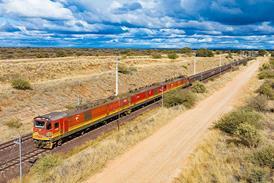
The Namibe Corridor links the Port of Namibe to the country’s mineral and agricultural interior via the Moçâmedes Railway, incorporating strategic branch lines such as Jamba and Tchamutete.
The Moçâmedes–Menongue line traverses one of Southern Africa’s most mineral-rich regions, hosting iron, copper, cobalt, chromium, titanium, quartz, and ornamental stone deposits—resources experiencing steadily growing international demand.
The corridor benefits from a naturally secured cargo base, historically transporting between five and six million tonnes per year.
Beyond its strong resource foundation, it is supported by strategic infrastructure that enhances operational potential: the Sacomar terminal, modernized for large-scale exports; the forthcoming Arimba logistics platform, equipped for storage, processing, and distribution; workshops, training centers, and a railway ecosystem with theoretical capacity to handle up to five million tonnes annually.
The 30-year concession, extendable to 50 years, encompasses operation, maintenance, modernization, and network expansion, with future potential for rail connections to Namibia and Zambia.
This cross-border component is particularly significant: it strengthens regional integration, provides competitive alternatives for landlocked countries, and positions the Namibe Corridor as a direct complement to the Lobito and Walvis Bay corridors, enhancing connectivity between the Atlantic and Indian Oceans.
Consolidating this axis is also vital for boosting exports, attracting processing industries, and reinforcing the resilience of regional supply chains.
The Namibe Corridor represents a strategic asset: established demand, immediate scale-up potential, existing infrastructure, and a stable regulatory framework.
Above all, it constitutes a solid economic opportunity for companies seeking to expand operations in Southern Africa with predictability, efficiency, and clear prospects for return on investment.
The corridor is, therefore, more than a railway asset: it is an integrated platform for regional economic growth, a tool for operational efficiency, and a gateway connecting the Atlantic, the Indian Ocean, and global markets.
For international operators seeking secure, predictable corridors with significant expansion potential, it represents a major opportunity in a transforming market.
This context makes the Namibe Corridor a rare proposition: a railway asset with assured demand, strong strategic relevance, and room for continued expansion.
Link: www.mintrans-tenders.ao