











News from the world rail freight market.
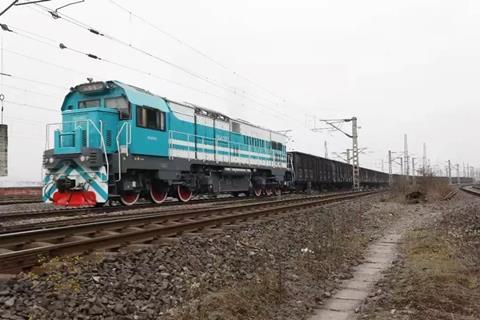
CRRC Ziyang has supplied Hebei Construction Group with two HXN6 six-axle hybrid locomotives powered by a battery pack charged by a diesel generator. According to the manufacturer they reduce emissions by 80%, noise by 85% and fuel consumption by 36%.
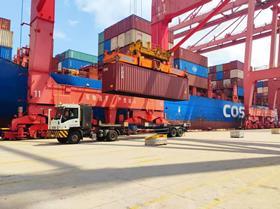
From May to September, the Kedentransservice subsidiary of Kazakhstan’s national railway KTZ organised 10 trains carrying 17 000 tonnes of containerised wheat from northern Kazakhstan to the Chinese port of Lianyungang and thence to the port of Haiphong in Vietnam. KTZ said this opens up new export horizons for Kazakh agricultural producers in the fast-growing markets of southeast Asia.
Switzerland has introduced new regulations for rail freight based on the investigations into the August 2023 derailment in the Gotthard Base Tunnel. The focus is on requirements for minimum wheel diameters, systematic and more frequent maintenance, and optimised inspections. Wheelsets used in Switzerland must have a diameter of at least 864 mm, compared to the European standard of 860 mm, and shorter and systematic intervals between technical inspections are required. Implementation of the measures is require ed by the end of 2025 at the latest.
The EU Agency for Railways has granted type approval for operation of Alstom Traxx Universal locomotives equipped with EbiCab 2000 ETCS Baseline 3. ‘With the fully approved version VR01.5, our customers can continue to operate locomotives on corridors in Germany, Austria, Poland, Czech Republic, Slovakia, Luxembourg, Hungary, Croatia, Slovenia and Serbia. This is an important step not only for us at Alstom, but for European rail interoperability as a whole’, said Dan Kurucz, Managing Director of Alstom for the Czech Republic & Slovakia, on September 5.

The Chartered Institute of Logistics & Transport South Africa and the Institute for Customs & Freight Forwarding have signed a memorandum of understanding to collaborate to professionalise South Africa’s logistics industry through industry standards, skills development and pathways for professional growth. ‘Instead of working in silos, we are building bridges to collectively take responsibility for ensuring our sector becomes globally competitive and raises its credibility’, said ICFF CEO Ingrid du Buisson.