









PHILIPPINES: The US Trade & Development Agency is to fund technical assistance to develop the planned 212 km Subic Bay – Clark – Manila – Batangas Railway, which would connect three of the Philippines’ most important ports.
The project aims to decentralise port activity, ease freight congestion and make provision for potential future passenger services. This complements the Luzon Economic Corridor programme to enhance connectivity and economic resilience across key logistics hubs.
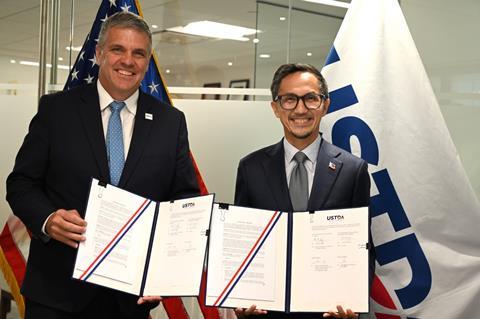
Under an agreement announced on June 26, USTDA is partnering with the Philippines’ Department of Transportation and working with Virginia-based Cadmus Group to provide expertise in transport modelling, port-rail integration and legal and institutional planning.
This preparatory work is intended to help mobilise Asian Development Bank financing for implementation of the project, which is expected to generate ‘significant’ opportunities for the US to export secure technology, equipment and services. Initial estimates in 2024 put the cost of the project at US$3·2bn, with the government envisaging that design work could be completed by 2026 enabling construction to begin in 2027.
Philippine Secretary of Transportation Vince Dizon said the SCMB Railway is ‘a transformative project that will modernise our logistics infrastructure, decongest Metro Manila and stimulate economic growth in the Philippines’.
Construction of the line, which broadly follows the route of a mostly moribund, 1 067 mm gauge Philippines National Railways route, was originally planned with Chinese support. However, China is reported to have pulled out and it is now being developed with US and Japanese backing.
‘This project underscores the US-Philippines alliance’s vital role in maintaining a free and open Indo-Pacific region’, said USTDA’s Acting Director Thomas R Hardy. ‘Our partnership with the Philippines exemplifies the strength of American leadership in the Indo-Pacific and underscores our commitment to advancing our shared interests.’