










This week’s round-up of news from the urban transport sector.
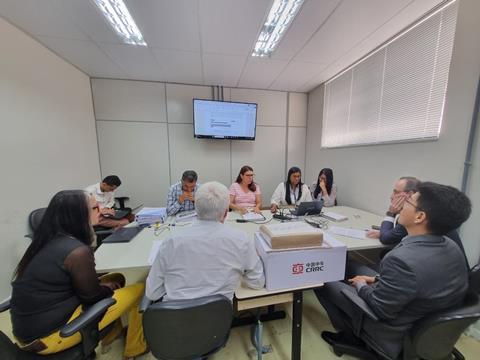
Bahia state transport operator CTB announced on November 28 that it had received bids from two consortia, one led by CRRC Changchun and the other by Alstom, for a tender to supply 10 trainsets to operate on metro lines 1 and 2 in the state capital Salvador.
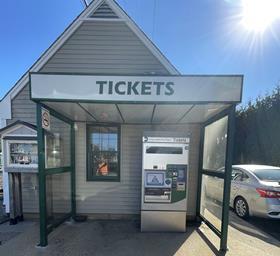
New York MTA has started rolling out replacement Scheidt & Bachmann ticket vending machines at Long Island Rail Road and Metro-North stations which can sell tickets for both networks. Passengers can also scan the barcode of a previously purchased ticket to purchase a similar ticket, while change is now offered with $5 and $10 notes instead of all coins. The machines provide services in nine languages plus English, instead of the previous three languages. The new TVMs were ordered following a significant delay to the planned OMNY introduction across Metro-North and LIRR, and installation is scheduled for completion by mid-2026.
CRRC Meishan has developed its first metro rescue vehicle, which is equipped for smoke extraction and fire extinguishing in tunnels and to act as emergency communications hub. Entry into service is planned for H1 2026.
As part of wider overhaul of its ticketing arrangements, Birmingham’s West Midlands Metro is to increase the penalty fare for travelling without a valid ticket from £10 to £100 during 2026 and will require tickets to be purchased before boarding. The operator said this would bring the West Midlands Metro into line with similar networks across the UK.
The Moovit app now sells mobile tickets for GTT metro, tram and bus services in Torino, as well as offering real-time updates on schedules, routes and waiting times. This follows the successful rollout in Roma. Torino-based WeTechnology supported the interoperability between GTT sales system and the Moovit app.
A third of all lifts on the Transport for London network now self-report as out-of-service, allowing real-time updates to be made available via journey planning tools. The technology is to be deployed at the remaining Underground stations and other parts of the TfL transport network from 2026, starting with busy central London interchanges and termini by the end of March.
UbiRider has obtained Payment Card Industry Data Security Standard certification for the secure processing of open-loop contactless bank card and mobile wallet payments. Thus will enable it to develop new features and leverage payment data to help transport operators benefit from open-loop payments, reduce fare collection costs, simplify payment control and reconciliation, and gain deeper ridership insights.