UK: The Scottish government issued a revised rail decarbonisation plan on November 21 that shifts the focus away from electrification of infrastructure to emphasise reduction of emissions from rolling stock.
Entitled Rail Recharged: Scotland’s Fleet Transition Strategy, the document marks a formal revision of the plans the devolved administration set out in the Rail Services Decarbonisation Action Plan, which Transport Scotland published in July 2020 in collaboration with Network Rail Scotland and ScotRail. This ambitious vision envisaged full decarbonisation of passenger rail services in Scotland by 2035, including the electrification of an average of 130 track-km/year.
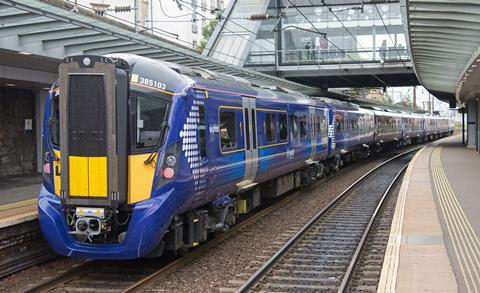
Ahead of the launch of the latest strategy, the government issued a statement acknowledging ‘the challenges we face in the post-Covid landscape and the impact these have had on previous decarbonisation commitments. It also demonstrates the ways in which we are making rail more attractive for existing and new passengers by progressing work to replace ScotRail’s oldest fleets with more modern trains.’
Credible strategy
The government says the revised plan ‘sets out a credible strategy to deliver decarbonisation in a proportionate way that achieves best value for the public purse’.
The document reiterates a previous policy goal that ScotRail’s existing diesel fleets will have been replaced by 2045 by zero-emission rolling stock. The strategy splits the Scottish network into three groups of services — inter-city, suburban and rural — and retains an ambition for full electrification to be the ‘end state’ for the first two categories, with electrification being seen as especially desirable on routes where freight service also operate. However, no routes or timescales for more wiring are identified in the plan beyond those projects already authorised.
Rural DMU cascade
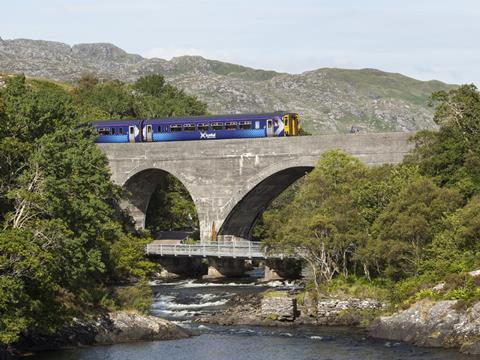
For the rural service group, the strategy sets out a plan for DMU cascades from routes where full or partial electrification is expected. It cites the transfer of Class 158 and 170 trainsets from routes in the Borders and Fife to the Highland lines as one likely option. But beyond that, the report recognises that work needs to continue to ‘consider the future of our rolling stock solutions for our rural routes, taking cognisance of technology development.
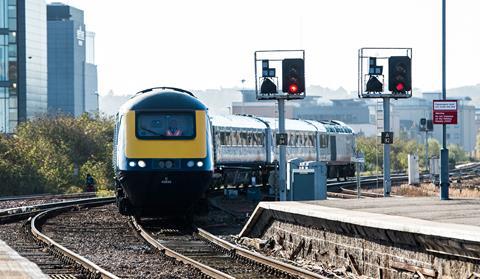
‘While we do this, we will continue to work collaboratively with our delivery partners to ensure that we make best use of what we already have and continue to provide an attractive, resilient and modern service for our passengers.’
IPMU goal
As part of what it terms a ‘long-term vision’, the strategy expects Independently Powered Multiple-Units to be ordered in the future for the various rural routes around the country, while acknowledging that a ‘one size fits all’ procurement may not be appropriate.
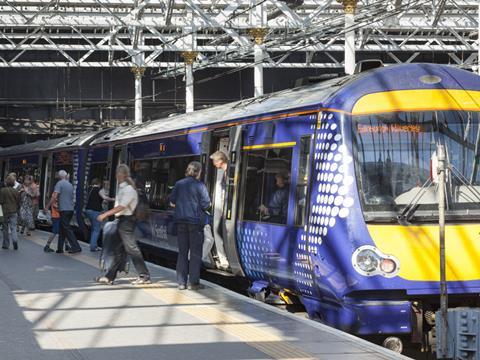
‘The potential options for independently powered trains include battery-only or hydrogen-powered trains, however, both are still technically and commercially immature and time is needed to allow the supply chain to scale up before these can be deployed on the network. Options will continue to be developed and will be appraised against benefits and costs, capabilities and maturity, to select solutions that meet service requirements effectively and efficiently’, the document says.
In its conclusion, the report says that the Holyrood administration will ensure that ‘we have a railway that is resilient and reliable for our passengers both now and into the future. However, our rail system does not exist within a vacuum, and it is important that our approach to replacing our trains is pragmatic, considers passenger needs, emissions targets, technological maturity, infrastructure requirements and the financial landscape.’
Supporting documents
Click link to download and view these filesrail-recharged-scotlands-fleet-transition-strategy-pdf-version
PDF, Size 2.41 mb