





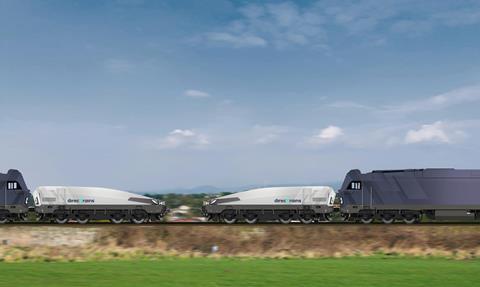
FRANCE: Start-up DirectTrainS reports the successful completion of the first field tests with its Dynamic Coupling system, designed to enable trains to join and split while moving.
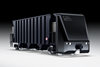
A Dynamic Coupling wagon would be attached to the front or rear of a train, and used in conjunction with software that maps and manages coupling points. It is intended for seamless installation with existing rolling stock, with no modifications required to infrastructure, signalling systems or regulations. Envisaged applications included ‘middle-mile’ parcel delivery, with parcels vehicles separating from moving trains. The aim is to develop the technology initially for freight use, with passenger trains to follow.
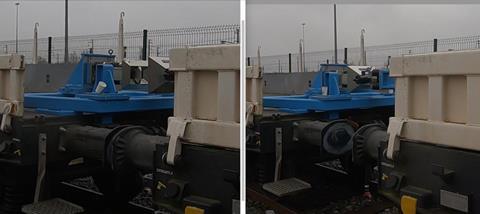
The tests conducted in collaboration with engineering partner CERTIA used 22·5 tonne carts to demonstrate the ability to couple and decouple high-mass trains in motion on a real railway. The company says there was no spillage from a cardboard cup placed on the fixture during coupling.

‘This successful test demonstrates that our vision for transforming rail transport is becoming reality’, said Alberto Mandler, CEO of DirectTrainS. ‘By enabling trains to couple and decouple while in motion, we can not only increase rail capacity and add significant operating flexibility but also reduce energy consumption and provide much better service, without building a single metre of new track.’
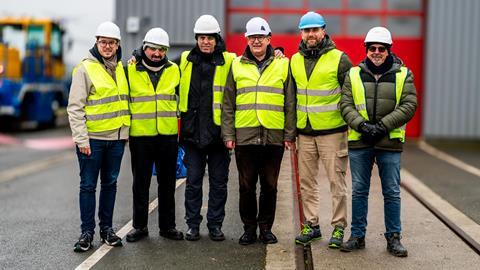
‘The system developed for DirectTrainS represented a genuine technical challenge, which we tackled with enthusiasm’, said CERTIA President Franck Thelot. ‘The initial full-scale tests proved to be successful and fully consistent with our multiphysics design model, thereby confirming the robustness of our engineering approach. This milestone marks a significant breakthrough: the concept of dynamic train coupling is now a demonstrated reality.’
DirectTrainS now plans pilot testing in collaboration with parcel delivery companies and railway operators on operational lines with various signalling systems.