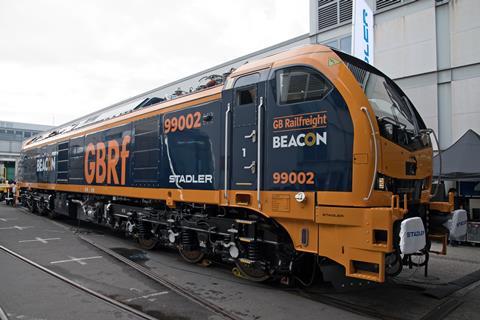
UK: European rolling stock leasing company Beacon has completed the acquisition of UK lessor Eversholt Rail, after the Competition & Markets Authority found the merger would not lead to a substantial lessening of competition.
Eversholt Rail will now operate under the Beacon brand ‘as part of a stronger pan-European rail leasing platform’.
‘This acquisition represents a powerful step forward for our business and for the customers we serve’, said Beacon CEO Adam Cunliffe on January 21. ‘By bringing Eversholt Rail into Beacon, we are creating a stronger, more capable organisation equipped to support the long‑term growth of sustainable rail transport across Europe.’
Eversholt Rail
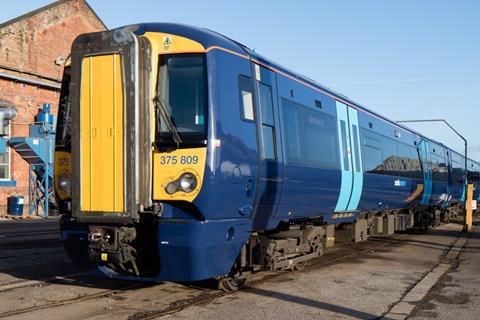
Eversholt Rail was one of the three rolling stock leasing companies formed in 1994 as part of the privatisation of British Rail.
HSBC acquired the business in 1997, and Beacon Rail was formed in 2009 when HSBC sold the non-UK assets. In 2010 HSBC sold the UK business to the Eversholt Investment Group SCS consortium of 3i Infrastructure, Morgan Stanley Infrastructure Partners and STAR Capital Partners with its co-investor PGGM.
The consortium sold it on in 2015, with Eversholt Rail becoming part of the Hong Kong-based group headed by CK Infrastructure Holdings, CK Hutchison Holdings, Power Assets Holdings and CK Asset Holdings.
Beacon agreed to acquire the Eversholt Rail business on July 24 2025.
Competition inquiry raises no concerns
Industry comment on the proposed deal was invited by the Competition & Markets Authority, which had not previously considered rolling stock leasing although its predecessor the Competition Commission carried out an investigation into the leasing of trains for franchised passenger services in 2009.
The authority said almost all third parties, including all of the parties’ freight operator customers, expressed neutral or positive views about the proposed acquisition.
CMA assessed the impact of the merger on the leasing of passenger trains and separately on freight locos. It found Beacon and Eversholt Rail were not close competitors in the passenger market, and there would continue to be sufficient alternatives.
In the freight sector, CMA found that the parties had not competed against each other to finance new locos or renew leases over the past 10 years, there was no evidence that Eversholt Rail would become a strong competitor to Beacon in relation to leasing of new-build freight locos, and that a range of alternative financing options would remain post-merger.
It found that once freight locos are leased, it is uncommon for them to move between operators as the assets are typically tied up in long-term leases that are not coterminous and tend to be renewed. Different loco classes also have different use cases and often cannot be used interchangeably. In combination, these factors have led to limited competition for the leasing of existing locos.
In addition, CMA found that demand for new-build freight locos is currently limited, as most existing locos are not yet at the end of their useful economic lives. However, there will likely be a new procurement cycle in the next five to 10 years as existing locos become life expired. In addition, diesel locos would eventually need to be removed from the network in line with decarbonisation plans.
Some freight operators indicated to CMA that negotiation dynamics between lessors and operators are relatively balanced, as lessors know that if they were to significantly increase lease prices, operators would consider alternative options such as direct procurement, negatively impacting lessors in the long run.