UK: Chancellor Rachel Reeves has announced five-year funding agreements totalling £15·6bn which will enable England’s mayoral combined authorities to progress local transport projects within city regions and surrounding towns.
Speaking at the Mellor Bus factory in Rochdale on June 4, Reeves said ‘the last government made big promises to invest in city regions’, but ‘had no plan to fund it’. She explained that ‘thanks to the changes to our fiscal framework announced in the budget, this government now does have the money’.
Transport Secretary Heidi Alexander described the announcement as a ‘watershed moment’, with the agreements ‘giving local leaders the means to drive cities, towns and communities forward, investing in Britain’s renewal’.
For too long, people in the North & Midlands have been locked out of the investment they deserve. With £15.6bn of investment, we’re giving local leaders the means to drive cities, towns and communities forward, investing in Britain’s renewal. https://t.co/w5zsecFzbg
— Rachel Reeves (@RachelReevesMP) June 4, 2025
The announcement comes ahead of the Spending Review on June 11, which will include funding for projects which are not the responsibility of mayoral combined authorities.
On the same day the government will also publish the conclusions of its review of the Treasury’s Green Book, which sets out guidance on how public servants assess the value for money of projects. Reeves said there would be ‘a new approach to decision-making in government, and an end to siloed Whitehall thinking’. The Green Book ‘may sound dry, but it is one of the reasons why there hasn’t been enough investment in the north and the Midlands’, said Reeves ‘For decades, I have heard from mayors across the country that previous governments have wielded the Green Book against them as an excuse to deny important investments in their areas.’
Funding allocations
| Mayoral combined authority | Funding allocation, 2027/28 to 2031/32 £bn (some to be brought forward to 2025/26 and 2026/27) | Projects likely to be taken forward by mayors |
|---|---|---|
| West Midlands | 2·4 | Light rail extension connecting Birmingham city centre to new sports quarter, unlocking £3bn investment from private investors. This is the first phase of a new mass transit route from east Birmingham to north Solihull. |
| West Yorkshire | 2·1 | ’Spades in the ground’ to start building West Yorkshire Mass Transit light rail network by 2028, aiming for first services by the mid-2030s. ’Transforming’ six transport corridors in West Yorkshire not covered by the mass transit routes, including new bus stations at Bradford and Wakefield |
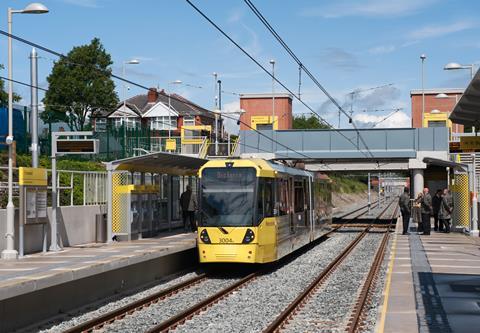
| Greater Manchester | 2·5 | Major infrastructure projects to unlock new homes, jobs and better connect communities, including growing and transforming the Metrolink tram network, with new stops in Bury, Manchester and Oldham and an extension to Stockport. A fully electric Bee Network, with zero emission public transport network across bikes, bus and tram by 2030, including purchase of 1 000 new electric buses. |
| South Yorkshire | 1·5 | £530m to renew the tram network, providing a fleet of replacement vehicles, modernising stops and maintenance to improve reliability. £350m to reform buses, with franchised buses operating in Sheffield, Doncaster and Rotherham by 2027 and across the whole of South Yorkshire by 2029. |
| Liverpool City Region | 1·6 | £100m for three bus rapid transit routes to Liverpool John Lennon Airport, Everton stadium and Anfield. A new fleet of buses for the city region’s franchised bus network, beginning with St Helens and the Wirral in 2026 and then Sefton, Knowsley, north and south Liverpool in 2027. |
| North East | 1·8 | Tyne & Wear Metro extension linking Newcastle and Sunderland via Washington, serving one of the largest advanced manufacturing zones in the UK. |
| West of England | 0·8 | £150m to improve rail infrastructure across the region, including funding to support WECA’s ambitions for increased frequency of services between Brabazon and the city centre. £200m for ’mass transit’ development between Bristol, Bath, South Gloucestershire and North Somerset. |
| Tees Valley | 1·0 | £60m for the Platform 3 extension at Middlesbrough station, unblocking the local network. |
| East Midlands | 2·0 | Designing a new mass transit system to connect Derby and Nottingham, encompassing road, rail and bus improvements across the Trent Arc corridor. |
Responses
Commenting on the funding announcement, Jason Prince, Director of the Urban Transport Group of transport authorities, said ‘government is signalling that transport spending in city regions is not simply a cost, but an investment that is vital to promote a growing, green, equitable and healthy society.’
Henri Murison, Chief Executive of the Northern Powerhouse Partnership, said ‘serious, long-term investment will be critical to driving regional growth’. He said previous investment in Greater Manchester’s light rail network ‘has already begun to close the productivity gap with London’, and ‘to build on that success and replicate it across all our regions in the north, we need to see key projects delivered’.
Trades Union Congress General Secretary Paul Nowak said ‘this investment can help get local transport working again, bringing more buses, more trams, and more trains to more communities. This will help commuters, improve quality of life for families, and support local businesses – boosting our economy.’
Nick Davies, head of climate policy at the Green Alliance think tank, said ‘more trams, trains and buses in the north and midlands are exactly what is needed to accelerate green growth, clean up our air, and create opportunities in every part of the country. It’s a good sign that Rachel Reeves is prepared to rethink Treasury rules that resulted in fewer public transport projects being built outside London. This welcome boost to capital investment also needs to be matched with greater day-to-day spending on transport across the UK to improve services and keep fares affordable.’
Railway Industry Association CEO Darren Caplan noted that ‘we now look forward to details of how the proposed local transport investments announced today will align with Network Rail and other rail clients’ work programmes in the nations and regions of the UK, in the months and years ahead.’
Colette Carroll, Managing Director for Transportation, UK & Ireland, at AtkinsRéalis, said ‘many of the schemes that could secure funding from today’s announcements will act as a vehicle for city-wide regeneration programmes: the prospect of greater transport links will positively impact investor confidence and supply chain certainty, and allow companies to invest in skills to drive better economic outcomes across the country.’
Ben Plowden, Chief Executive of Campaign for Better Transport, said ‘it is great to see the government investing in the local transport infrastructure that will tangibly improve the lives of millions across our city regions, and [it is] particularly good to see trams being prioritised in several areas.’ He added ‘we hope to see similar commitments to revenue funding in next week’s Spending Review, alongside support for local authorities to plan, deliver and run the high-quality transport services their communities need.’