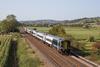
South Western Railway Class 159 DMU (Photo SWR)

UK: Ongoing infrastructure problems caused by unusually dry weather mean South Western Railway services between London Waterloo and Exeter St Davids are to be cut from hourly to every two hours and journey times extended by an hour.

The temporary timetable running from August 11 until further notice is designed to enable a reliable service to be operated while speed restrictions are imposed because of soil moisture deficit. This will also allow services to be reinstated at Crewkerne, which has been served by buses since July 28.

‘We have not taken this decision lightly and we recognise the impact that it will have on customers west of Yeovil in particular. However, to continue operating a safe and reliable service, we have no alternative but to introduce a reduced timetable’, South Western Railway’s Chief Operating Officer Stuart Meek said on August 1.

Network Rail Operations Director Tom Desmond said ‘we want to give customers the longest notice possible of timetable changes, and following a comprehensive analysis of ground and track conditions, we know that we must make changes in the next two weeks. We have worked closely with our colleagues at South Western Railway to understand the impact of the speed restrictions, and we will regularly review conditions in order to restore the normal timetable as soon as possible.’

Soil moisture deficit

The problem has arisen because of the exceptionally warm and dry weather this year; according to the Met Office, England experienced its driest spring since 1893.

This has removed moisture from the clay soil embankments between Gillingham and Axminster, causing them to shrink. This soil moisture deficit has disturbed the track, requiring the maximum speed to be reduced from 135 to 65 km/h.

Most of the route west of Salisbury is single track, and the speed restrictions stretching over 20 km mean trains cannot pass at their allotted times.

Network Rail said attempting to stabilise the track now would only provide a short-lived fix, as the soil continues to move and the dry conditions are expected to continue.

Once soil moisture levels improve and the ground begins to rehydrate and settle, engineers will carry out lasting repairs to stabilise the embankments and restore track levels, allowing the normal timetable to return.

Other routes at risk

Met Office scientist Emily Carlisle said ‘the data clearly shows that recent decades have been warmer, sunnier and often drier than the 20th century average’.

Network Rail said soil moisture deficit is a particular problem in southern England, where many 19th century embankments are made of clay which absorbs a lot of water and shrinks significantly when it is dry. It began recording soil moisture levels in 2009, and levels at some sites in the Southern Region are at their lowest since those records began.

Basingstoke to Exeter is one of the most vulnerable lines, and other routes at risk include the North Downs Line, Redhill to Tonbridge, Maidstone East to Ashford, Faversham to Whitstable and Tonbridge to Hastings. The problem also occurs on the London Fenchurch Street to Southend line and the Southminster branch, and there is a similar situation with peat north of Ely.

The infrastructure manager said re-engineering all its clay embankments would cost tens of billions of pounds and take decades, and so the best defence is preparation, including removing trees and vegetation that absorb water.

It plans for the effects of soil moisture deficit at the same time as making hot weather preparations, with additional maintenance in the winter and spring to ensure track quality before the hot weather arrives.