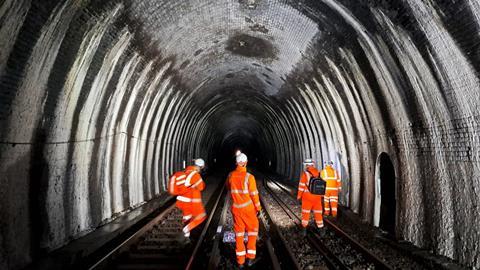
UK: Infrastructure manager Network Rail says a strengthening and waterproofing process used on the 175-year old Blackheath Tunnel in southeast London is believed to be ‘the first of its kind in the UK and potentially the world’.
The 1·6 km tunnel opened in 1849 is prone to leaks and damage from water which filters through the ground above and damages the track and electrical equipment.
This is being addressed through two 10-week closures for engineering works this year and last year; Network Rail calculated that traditional weekend closures would mean spending at least 50% of each weekend bringing materials and plant in and out of the tunnel, leaving limited time for repair work.
During this year’s work programme from May to July, engineers injected expansive grout into the pockets of sand and gravel surrounding the tunnel to knit and compresses the loose material tightly together. A further layer of grout was applied to the back of the tunnel lining to waterproof the worst-affected areas. A tunnel monitoring system has been installed to detect movement to 0·01 mm.
The cost saving from the approach is estimated at £10m, and the technique will now be replicated across other parts of the rail network.
‘Last summer our engineers cleaned soot from the tunnel lining, carried out detailed surveys and replaced thousands of bricks to stop water getting in’, said David Davidson, chief operating officer for the South Eastern Railway partnership of Network Rail and train operator Southeastern. ’This year we’ve installed a new tunnel lining, rebuilt drainage systems and completed essential track work, including the removal of the waterlogged sections known as wet beds.’