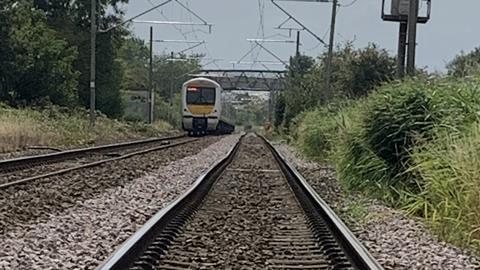
UK: South Essex train operator c2c is to temporarily amend its timetable following track problems arising from soil moisture deficit caused by this year’s exceptionally dry weather.
The London Fenchurch Street to Southend operator said its route had been affected by the driest spring in more than 50 years, leading to the clay soil under the line to dry out and shrink and the track to become uneven.
Infrastucture manager Network Rail is to apply speed restrictions from August 18, meaning some journeys will take a few minutes longer than normal and some will be altered to start or terminate early or not stop at some stations.
The timetable alterations are expected to be in place for between two and three months.
Planned night time and weekend engineering work will continue, with Network Rail taking the oppotrunity to use tampers and stoneblowers to correct the level of the track and create a solid foundation so that trains can run smoothly.
In the last year Network Rail has dropped 12 600 tonnes of ballast across the route to try to minimise the effects of clay shrinkage, but the exceptionally dry spring has meant that it has not been possible to eliminate the track issues.
Routes at risk
Network Rail has said soil moisture deficit is a particular problem in southern England, where many 19th century embankments are made of clay which absorbs a lot of water and shrinks significantly when it is dry.
c2c is the second train operator to announce timetable changes because of the problem. South Western Railway had already reduced its services between London Waterloo and Exeter St Davids as a result of track disturbance between Gillingham and Axminster.
Other routes considered to be at risk include the North Downs Line, Redhill to Tonbridge, Maidstone East to Ashford, Faversham to Whitstable and Tonbridge to Hastings.