









Features & Analysis – Page 6
-
 In depth
India: Using Lidar to support automated operations
Indian Railways is already using Lidar-generated 3D mapping and exploring the use of geometry inspection systems to improve the safety of infrastructure maintenance. The next step envisages the use of Lidar to support automatic train operation, as Bharti Jain explains.
-
 In depth
Signalling: Low-cost ETCS to support regional roll-out
Kombud Group is developing a range of ETCS products to provide cost-effective interoperability on regional lines. Benjámin Zelki reports from the manufacturer’s newly opened plant in Radom.
-
 In depth
Mexico: Tren Maya is up and running
Regular inter-city passenger services have returned to Mexico with the launch of Alstom’s Tren Maya fleet across five states in the Yucatán Peninsula.
-
 In depth
Interview: It is time to embrace open source software
Set up by UIC and three national railways, the recently formed Open Rail Association is seeking to grow its membership to drive adoption of open source software in the rail market, as Swiss Federal Railways’ CIO Jochen Decker and Nicole Göbel, Chief Executive of Deutsche Bahn’s information technology arm DB Systel, explain to Nick Kingsley.
-
 In depth
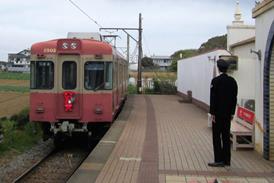
Regional Railways: A reversal of fortunes in Catalunya
Threatened with closure in the mid-1980s, Catalunya’s Lleida – La Pobla de Segur branch has been revitalised by the regional government over the past two decades. Targeted investment is paying off with steadily increasing ridership, reports Mike Bent.
-
 In depth
Regional Railways: Technology offers hope of secondary line revival
Around 17 000 km of abandoned or poorly used lines in France and Germany could be revived using small, frequent or on-demand vehicles as part of a decarbonisation drive. Thanks to rapidly progressing technologies with minimal investment and low operating costs, there is an opportunity to tap political support to make them a reality. Reinhard Christeller reports.
-
 In depth
Southeast Europe: Recovery fund provides a belated catalyst for Romania
The European Union’s Recovery & Resilience Fund is the latest opportunity to fund much-needed improvements in the Romanian rail network, but the looming deadline for project completion is proving tough to meet. Toma Bačić explains.
-
 In depth
Comment: A glimpse over the horizon
As celebrations in Britain this year mark 200 years since the opening of the Stockton & Darlington Railway, our Consultant Editor Murray Hughes reflects on his 50 years writing for Railway Gazette International and assesses where the rail sector might go in the coming half-century.
-
 In depth
North America: Keeping track of long freight trains
As the rail sector increasingly embraces longer trains to drive efficiencies, advanced telematics are helping to ensure safety and reduce maintenance costs, opening up the prospect of intelligent and more sustainable rail freight transport.
-
 In depth
Southeast Europe: EU funding underpins Bulgarian route modernisation schemes
Financial support from Brussels is lending much-needed momentum to a long-running programme of route modernisation on the key rail axes linking Bulgaria with neighbouring countries and serving its major ports. Toma Bačić reports.
-
 In depth
Operations: Shadow operators help to optimise commercial service
Early operator engagement is essential to ensure the success of rail projects, particularly those that are highly complex in terms of planning, contracting approach and implementation.
-
 Metro Report International
North America: Bringing more rail to Mexico’s metropolis
Two major suburban rail projects are well into the phase of delivery in the state of Mexico, which borders Mexico City. But plans to extend metro and light rail beyond the capital’s boundaries are yet to be finalised as policymakers continue to flirt with non-rail modes, which are often perceived as cheaper to deliver.
-
 In depth
Stations: Glass supports safer hubs
Once regarded as a fragile material, modern glazing products are increasingly being used to enhance the safety characteristics of major transport hubs.
-
 In depth
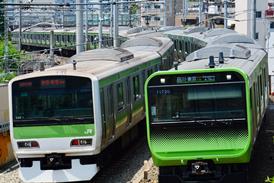
Japan: Understanding when to replace electronic signalling equipment
Using estimates for the service life of electronic signalling components, Japan’s Railway Technical Research Institute has developed a method for choosing the ideal time to replace them.
-
 In depth
Southeast Europe: Reforms offer a route to Georgian revival
After a long period of neglect, railways in Georgia are undergoing reform at a time when they stand to benefit from east-west trade moving via the Transcaucasian route between the Caspian Sea and the Black Sea.
-
 In depth
Comment: A waning appetite for competition
While the EU’s third and fourth railway packages sought to liberalise the passenger rail sector within the bloc and influence it beyond, the establishment of a competitive dynamic within the European market seems less assured than it has for some time, argues Executive Editor Nick Kingsley.
-
 Rail Business UK
Viewpoint: ‘Persons with Reduced Mobility’ risks becoming an outdated term
Persons with Reduced Mobility was once considered a progressive descriptor, yet now it stands as a reminder of how industries must remain agile in their accessibility approach, says Emma Partlow, Director of Consumer Engagement & Policy at Transreport.
-
 In depth
Stations: Keeping Eurostar passengers connected
Road transport provider CMAC has been working with Eurostar to provide taxi, bus and coach services, which enable the pan-European operator to manage disruption better and support pre- and post-shift travel for its traincrew.
-
 In depth
Stations: Barcelona’s next rail hub nears completion
To be served by high speed, regional, suburban and metro trains, La Sagrera station taking shape to the northeast of Barcelona is set to become the city’s largest multimodal interchange, handling upwards of 100 million passengers/year. Mike Bent explains.
-
 In depth
Interview: Putting ERA at the heart of Europe’s railway ecosystem
Due to step down at the end of December, with the end of his second mandate as Executive Director of the EU Agency for Railways, Josef Doppelbauer explains to Chris Jackson what the agency has achieved over the past decade.