








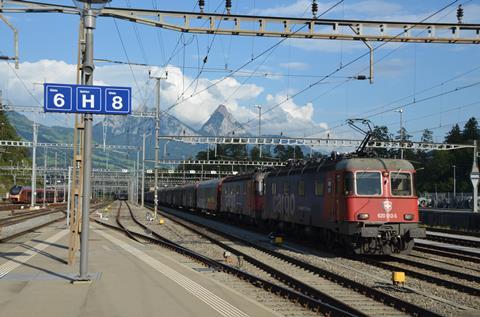
SWITZERLAND: State-owned SBB Cargo is undertaking a realignment of its freight services under the Suisse Cargo Logistics programme. This aims to address its losses and meet a government requirement for the national railway’s freight business to become self-sufficient.
SBB Cargo said the operation of freight trains is not a public service, and becoming self-sufficient would ensure the long-term provision of environmentally-friendly freight transport services in Switzerland.
The Swiss freight market was liberalised in 1999, and SBB Cargo’s losses reached SFr76m in 2023.
Wagonload traffic has long been loss-making, and volumes have fallen 30% in 10 years. The government provides an annual subsidy of SFr50m for wagonload traffic, but SBB Cargo aims to reduce the network, renegotiate prices with customers and reduce costs.
SBB Cargo is also developing a revised concept for long-distance combined transport which is based on low operating costs and cutting unprofitable services. This to launch in 2026 with a north-south shuttle between Dietikon near Zürich and Stabio on the Italian border. If this proves successful, SBB Cargo would expand the model throughout Switzerland, including the development of an east-west route, with the aim of shifting around 1 million lorry journeys from road to rail every year from 2050.
SBB is also in talks for Swiss Post to lease and take over operation of the Cadenazzo terminal in Ticino, with SBB to provide five instead of four trains per week to the site from December 2025.
The changes will mean the loss of around 65 jobs by the end of the year, including 40 in Ticino. On August 25 SBB said two-thirds of the people affected have already found internal redeployment at SBB’s infrastructure or passenger businesses or taken early retirement, while the others would be able to find jobs at local passenger operator TILO or in other regions.