











The government’s ongoing revival of a slew of railways across the south of the country gained significant momentum in November and December last year, with new passenger services being launched on two routes. However, progress has been overshadowed by a fatal derailment on December 29, prompting temporary suspension of Trans-Isthmus passenger operations. Michael Dreyer reports.
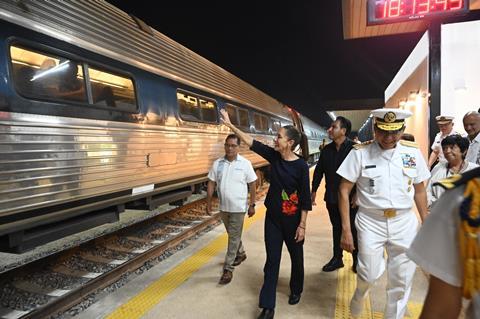
MEXICO: The completion of the first 175 km section of Line K of the Interoceanic Railway of the Isthmus of Tehuantepec from a junction on Line Z at Ixtepec east to Tonalá allowed Line K long-distance passenger services to start running on November 21.
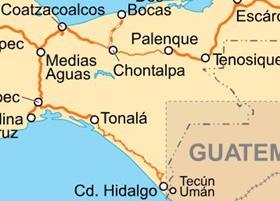
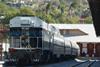
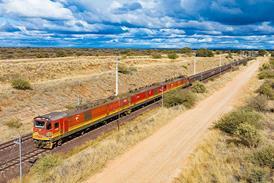
Line K passenger trains share the route of Line Z services from Salina Cruz in the south of country as far as Ixtepec, before turning east to run over Line K to Tonalá. Long-distance services on the Trans-Isthmus railway use three second-hand ex-British Rail IC125 High Speed Train diesel power cars and 11 MkIII coaches, augmented by a number of ex-Union Pacific SD70M diesel locomotives and coaches.
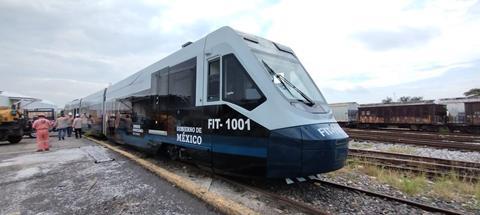
A month after the start of Line K operations, El Tehuanito del Sur regional rail services were launched on December 15, running 89 km from Salina Cruz to Unión Hidalgo, using sections of both lines K and Z.
The service consisted of one return journey on weekdays, using two Citylink bi-mode tram-train vehicles. These were originally built by Vossloh España for the aborted electro-diesel tram-train project in León in Spain, before they were transferred to Mexico for use on a 17 km tourist-oriented route in Puebla that operated from 2017 until 2021 when the service was suspended because of continued losses.
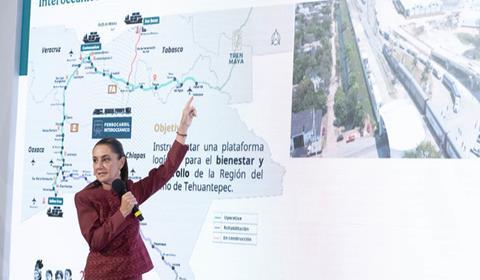
The work to create Line K forms part of the national government’s ongoing ambition to rebuild three lines totalling 1 087 km to form the Trans-Isthmus network. This is envisaged to carry both freight and passenger traffic.
The 309 km Line Z linking Coatzacoalcos on the Gulf of Mexico with Salina Cruz opened in December 2023 as the first part of the network.
Service suspension after derailment
However, the revival was struck by tragedy at the end of 2025 when a passenger train derailed near Chivela on Line Z on December 29. The loco-hauled trainset had been running between Salina Cruz and Coatzacoalcos when it came off the tracks, causing 14 fatalities and 98 injuries.
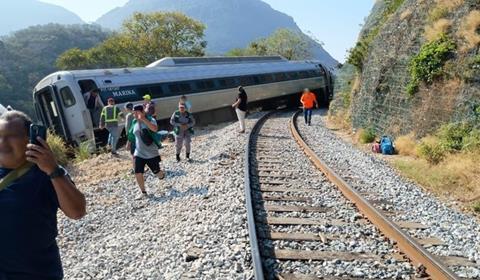
In response, the Mexican Navy, which operates passenger services on the Trans-Isthmus Railway through its Ferrocarril del Istmo de Tehuantepec subsidiary, suspended all passenger operations until further notice, pending investigations, repairs and the implementation of additional safety measures.
Line K extension under way
Meanwhile, work to rehabilitate more of the rail network in the south of the country continues. The next segment of Line K to be renovated will cover the 284 km from Tonalá eastwards to Ciudad Hidalgo on the Guatemalan border. The scope includes track renewals, station improvements, bridge works and signalling upgrades. Full opening is planned for the second quarter of 2026.
Line K is ultimately planned to be 459 km long, creating a mixed-traffic corridor running from Ixtepec to Ciudad Hidalgo. The government also has plans to commission a 13·8 km branch line to Puerto Chiapas, diverging from the main line at Los Toros.
Oil branch takes shape
Passenger and freight operations on the 328 km west-to-east Line FA linking Coatzacoalcos to Palenque started in September 2024. Construction has been underway since October 2024 on a 113 km greenfield line branching off this corridor at Roberto Ayala station in Chontalpa and running to Puerto Dos Bocas on the Atlantic coast. This will serve the Olmeca oil refinery, which is located in the port area. Works are expected to be completed in March 2027.
Regional service on Line Z
Elsewhere, preparations are in hand to facilitate the launch of a second local passenger service using the tram-train cars imported from Spain. This will be known as the Tehuanito del Norte, and it will run north-south over 108 km of Line Z from Ciudad Ixtepec to Ubero, close to the border between Oaxaca and Veracruz states. It will serve nine stations.
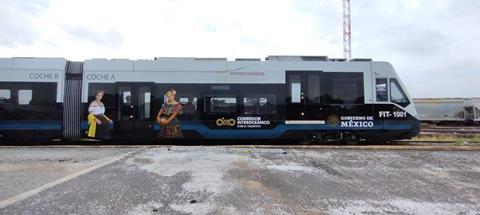
The preparatory works are focused on station improvements, with platforms, passing loops and other amenities being added at the various stops along the route. Completion is scheduled for later this year. The service will use tram-train cars drawn from the same fleet as those used for the Tehuanito del Sur.