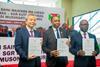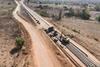








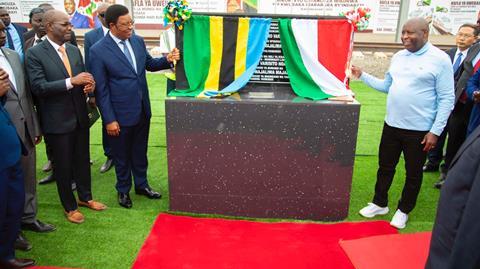
AFRICA: Construction of a railway from Uvinza in Tanzania to Musongati in Burundi was officially launched on August 16, with a ceremony at Rubara in Burundi’s Burunga province attended by the President of Burundi Évariste Ndayishimiye and the Prime Minister of Tanzania Kassim Majaliwa.
A US$2·15bn contract to build the 240 km electrified standard gauge line was signed in January by the two governments, China Railway Engineering Group and China Railway Engineering Design & Consulting Group. The work is expected to take six years.
Financing is being provided by the African Development Bank through a concessional loan.
Economic integration
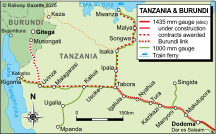
The line is expected to strengthen economic integration and trade in the region by reducing significantly the cost of transporting goods and people between the two countries. It will serve three stations in landlocked Burundi and five in Tanzania.
Majaliwa said passengers from Burundi would be able to reach Dar es Salaam within a day, while freight transit times would be cut from 96 h to 20 h.
Freight traffic is expected to include minerals such as nickel, platinum, palladium, copper, gold and iron from Burundi for export through the Indian Ocean port, with flows of up to 3 million tonnes annually.
Tanzania’s Minister of Transport Makame Mbarawa said the cost of transporting a 20 ft container would be reduced from US$3 800 to US$2 000.
A happy day
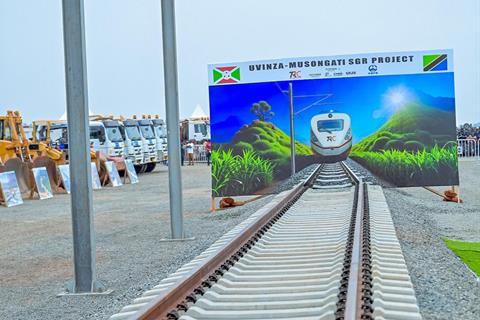
President Ndayishimiye said the presence of high-level officials from the two countries at the launch ceremony reflected the importance of the project in strengthening ties of friendship, co-operation and solidarity.
‘Today is a very happy day for us’, he confirmed. ‘We’ve had a lot of conversations from time to time. In 1921, this project was started by the Belgians and then came the Germans but failed. Today in Tanzania and Burundi we have succeeded.’
Looking ahead, he said that ‘we want the railway to connect to Kindu, in the east of DR Congo. And after that, we want the rails to reach West Africa, on the shores of the Atlantic Ocean, as we believe the route will accelerate development.’