








This week’s round-up of news from the urban transport sector.
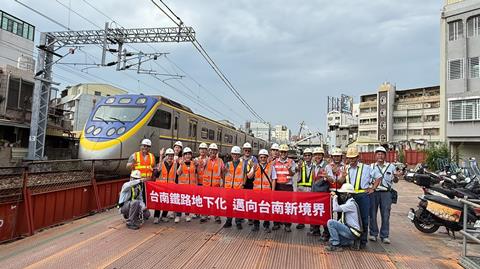
The structure of the 8·23 km tunnel for the Tainan Railway Underground Project has been completed. The project is intended to place a section of railway around the main station underground to provide space for urban regeneration and improve suburban rail services. Now track, electrification, and signalling works are under way to open the new section by the end of 2026.
An objection to the planning consent of Dublin’s planed MetroLink automated metro in mid-November led the project to stop until the objection is facing court hearings, which started in early December. ‘We are still on track, and hope it will be resolved very quickly’, MetroLink Programme Director Sean Sweeney told Railway Gazette International in late November.
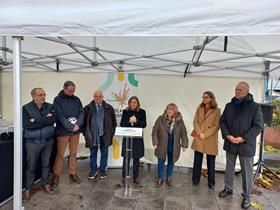
Revenue services started on December 6 on Bordeaux tram Line E from Blanquefort to Floirac-Dravemont and Line F from the airport to Gare Saint-Jean and Bègles. The routes were created by connecting two existing branches of Line A and a branch of Line C via a new set of points built at Porte de Bourgogne in the centre.
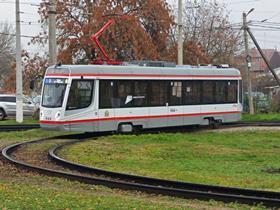
UKVZ has completed the shipment of 49 single-section, fully low-floor Type 71-628-01 trams to Krasnodar. They have been supplied under the terms of a PPP concession agreement involving Sinara Urban Transport, the Krasnodar regional authority and the city to renovate and expand the city’s tram network. In total, UKVZ has manufactured 172 cars for Krasnodar in 2019-25.
The Tyne & Wear Metro is trialling the provision of free wi-fi at its Central station in Newcastle city centre. If successful it could be made available at other busy underground stations. ‘Better connectivity at our underground Metro stations is something that customers really want to see’, said Steve Duchar, Head of ICT at transport authority Nexus. ‘We see strong data connectivity on Metro trains and at most of the stations across the system, but the busy underground stations could be better and often struggle to get any 4G or 5G connection at all, other than with EE. Wi-Fi remedies this issue.’

Siemens Mobility subsidiary Hacon has developed the leopoldi.info journey planner for Niederösterreich transport authority NÖVO, enabling passengers to find the best routes by bus, train, on-demand transport, bicycle or on foot in the Land and throughout Austria. It provides real-time data, current traffic information and stop information. The app is available both as native app for iOS and Android and via an online interface.
The European Transport Workers’ Federation convened a networking event in Brussels on December 9-10 which brought together a wide array of stakeholders to discuss common goals and potential future alliances to improve public transport in Europe. This included representatives from trade unions, green campaigners, passenger groups, disabled rights activists, employers and policymakers. Ambitions include a ‘massive’ expansion of public transport under the European Green Deal, a ‘just transition’ for public transport workers during the move to zero-emission buses and stronger capacity within unions to engage with local authorities and civil society on sustainable urban transport. ‘Public transport workers and users share the same interests — well-funded transport systems that provide high-quality jobs and high-quality services’, said Dirk Schloemer, Chair of the ETF Urban Public Transport Committee. ‘Unions and civil society organisations must come together at local, national and European levels to force politicians to give public transport the priority it deserves.’