







This week’s round-up of news from the urban transport sector.
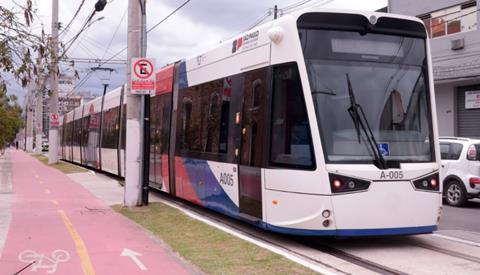
Limited services with free travel started on December 1 on a 4·3 km tram extension in Santos. The route branches off the existing network at Conselheiro Nébias and runs north on Av Conselheiro Nébias and then west on Gen. Câmara Road to Valongo, and returns on Amador Bueno and da Constituição roads, serving 12 new stops. Services operate Monday to Saturday between 09.00 and 15.00, with full service scheduled to start in March 2026. Ridership is expected to be 35 000 passengers a day.
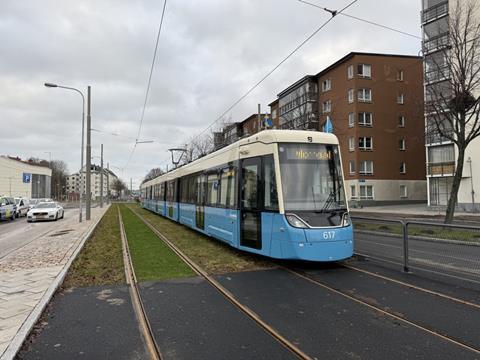
Revenue services started on December 12 on a 2·2 km tram section in Göteborg, branching off the existing network north of the Hisingsbron bridge and running west to Lindholmen, serving three new stops. The branch is served by newly created Line 12 and Line 10 which was diverted from its previous Biskopsgården terminus.
On December 12 Delhi Metro Rail Corp officially commenced construction of the Saket G Block – Lajpat Nagar section of the Golden Line. This is the first section of Phase IV beyond the priority corridors where physical work has begun, and will be elevated with eight stations. Tendering and preconstruction works are also underway for the Phase IV extensions from Inderlok to Indraprastha and Rithala to Narela.
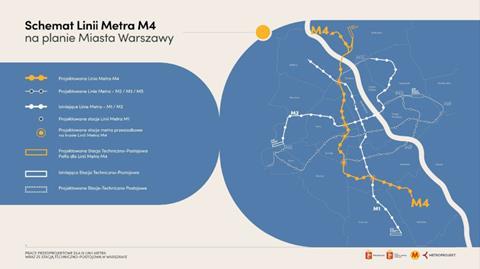
The city council in Warszawa has announced the completion of early design works for the 26 km, fully automated, north-south metro Line 4. It would serve 23 stations linking Myśliborska and Wilanów tram stops. Final design is scheduled to be completed for November 2027.
On December 13 the Asian Development Bank announced the approval of a US$240m loan as the second tranche of the Chennai Metro Rail Investment Project. This is part of ADB’s US$780m multitranche financing facility for the project, approved in 2022, and follows the initial US$350m loan under the first tranche. The new financing will fund civil and system works for Line 3’s elevated section (Sholinganallur – Sipcot-2), Line 4’s underground section (Lighthouse – Kodambakkam), and key system components for line 5, including power, traction and telecoms. The tranche will also support upgrades to multimodal interchange areas. The sections total 20 km of elevated and underground route and 18 stations with universal access features and disaster-resilient infrastructure designed for extreme weather events.
Chicago Transit Authority has launched two Problem Statements through its Innovation Studio initiative which is designed to allow businesses and community organisations to pilot ideas to overcome some of the agency’s biggest challenges. The first is: how can CTA effectively engage with groups of youth and young adults (typically ages 10-29) to promote a safer, more welcoming transit environment, and discourage violent and disruptive incidents that occur on the system typically during the late afternoons and overnight hours as young community members gather on CTA vehicles and at facilities? The second is: how can CTA compassionately engage and connect riders experiencing mental health crises, substance use challenges, and/or other vulnerabilities to supportive services and promote safe and welcoming spaces for all riders and employees?
Transport for London’s latest public consultation on proposals to extend the Docklands Light Railway from Gallions Reach to Beckton Riverside and Thamesmead found that 76% of respondents supported the proposed route, 66% backed the proposed station at Beckton Riverside and 77% the proposed station in Thamesmead town centre. A further public consultation is planned for 2026, ahead of submitting a Transport & Works Act Order application to the Secretary of State for Transport by the end of that year. TfL has confirmed that while the current focus is on delivering the Thamesmead extension, the design allows for potential future expansion.
Delhi’s DMRC has signed a memorandum of understanding to co-operate with IIT Hyderabad’s Technology Innovation Hub for Autonomous Navigation. This was set up by the university’s Department of Science & Technology to develop autonomous navigation and data acquisition systems that enable ground vehicles, robots, unmanned aerial vehicles or other autonomous platforms to navigate and collect data without human interventions.
The ESP Group has been appointed to the UK Crown Commercial Service’s two-year RM6347 Transport Technology framework for Lot 7b: Smart ticketing, focusing on system integration for smart ticketing and integrated travel. ‘It provides us with a fantastic opportunity to collaborate with public sector partners to shape the future of UK transport and mobility’, said CEO Ashley Meston. ‘Our expertise in smart ticketing, digital integration and customer experience positions us perfectly to deliver innovative solutions that make travel simpler, smarter and more sustainable.’