




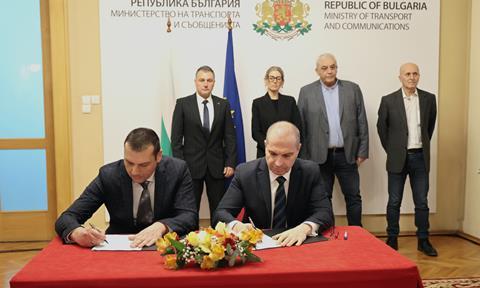
BULGARIA: Following a competitive procurement, the government has signed three contracts for national incumbent BDZ Passenger Transport and new entrant Ivkoni Express to provide passenger rail services for 12 years from the December 13 2026 timetable change.
Ivkoni Express is part of the Union Ivkoni Group, the country’s largest coach operator which serves around 100 destinations within Bulgaria and more than 150 across central and western Europe as well as Greece and Turkey.
The two operators now need to agree arrangements for the use of rolling stock, establish procedures for co-operation and prepare for the launch of under the new contracts with the December 13 2026 timetable change.
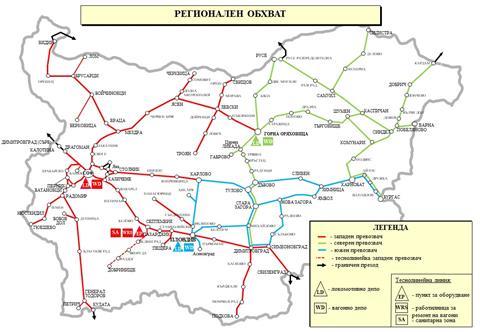
| Bulgarian passenger train operating contracts | |||
|---|---|---|---|
| Region | Share of national rail market | Winner | |
| Western | 75% | BDZ – Passenger Services | |
| Northern | 14% | Ivkoni Express | |
| Southern | 11% | Ivkoni Express |
It is expected that 813 BDZ employees will transfer to Ivkoni Express, while retaining their current working conditions.
Minister of Transport & Communications Grozdan Karadzhov said the state would retain a key role and overall control, determining the scope of services, quality standards and financing and retaining ownership of rolling stock.
A European approach
‘We prepared and conducted the procedure with unprecedented publicity and transparency’ Karadzhov said when the contracts were signed on February 11. ‘All documentation was prepared under constant monitoring and in co-ordination with the European Commission. This was a conscious choice, instead of creating a “Bulgarian solution” that would then be challenged, we built a model that is fully compatible with the European framework’.
He said ‘with the signing of these contracts, we have successfully completed a key reform of the public transport system’, adding that ‘without accurate and timely implementation, Bulgaria risked not only delays, but also a real loss of investment in new rolling stock’.
He said ‘with the opening of the market to private operators, rail transport should become more comfortable and more punctual’.
Meanwhile the draft Public Transport Act has been prepared by the Ministry of Transport & Communications, adopted by the Council of Ministers and submitted to parliament for approval. The Ministry of Electronic Governance is also expected to approve the transport ministry’s technical specifications for a single electronic ticket system prepared by our ministry
- Bulgaria, Greece and Romania have agreed to jointly request EU funding for the modernisation of routes from Thessaloniki to Sofia and București, with the aim of co-ordinating efforts so that works including 11 km of electrification at the existing bridge over the Danube at Ruse, construction of the proposed third Danube bridge and a tunnel through the Balkan mountains can be implemented without bureaucratic delays. Meanwhile direct passenger services between Sofia and Thessaloniki are expected to start in 2027, after a 10-year hiatus.