






CHINA: Technology company Huawei is seeking to expand the scope of its TFDS rolling stock condition monitoring technology from freight wagons to passenger trains, with a view to developing automated inspection of the whole exterior of a vehicle.
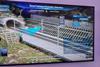
Launched initially in 2023, TFDS — or Trouble of Moving Freight Car Detection System — uses high-definition trackside cameras to capture images of freight trains as they pass through the detection stations. Initially, the tool sent images for individual analysis by a human inspector, who would then raise alerts based on his or her interpretation of the data.
However, with nearly 1 million freight trains currently in operation across China, Huawei says the TFDS detection stations generate hundreds of millions of images daily that require thorough analysis, creating a substantial workload. Approximately 6 000 inspectors are tasked with manually reviewing these images, averaging 15 000 images per person per day. To reduce the burden on staff, Huawei has now launched AI algorithms developed through its Pangu Railway Model to make the TFDS tool more intelligent, spotting potential defects automatically and flagging these to human inspectors.
The company says the model has been ‘pre-trained’ with ‘billions of parameters and millions of samples’, which can be used to support accurate identification of more than 70 classes of China Railway freight rolling stock and over 430 fault types. The model is supported by on-demand computing power to ensure spikes in demand can be managed effectively. Huawei reports that to date, the Pangu TFDS tool has an overall fault identification rate of approximately 99∙3% ‘in both human-machine collaboration and pass-through scenarios’, with no critical fault detection omissions so far.
The adoption of AI in TFDS has generated significant efficiency gains, Huawei says, with the initial human-led detection process requiring 15 min and 4-5 staff to inspect images from a single train. This has now been reduced to 5-8 min per train with one or two staff to review and validate the results.
A Huawei spokesperson told Railway Gazette International that the TFDS technology is currently able to inspect and analyse running gear and underframes, but it is hoped that further development will enable it to undertake ‘comprehensive inspection of the entire exterior of a train car’.