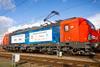







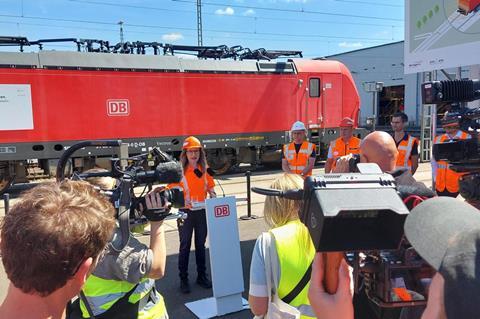
GERMANY: A DB Cargo electric locomotive has been equipped with automatic and remote train operation technology which is to be used to test automated freight haulage under real-world conditions.
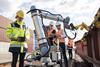
On July 4 retrofitted Siemens Mobility Vectron electric locomotive 193 347 was presented to guests at the Köln-Gremberg workshop, where a second loco is also being equipped. DB Cargo said ‘the goal is clear: ATO and RTO should make rail freight transport more efficient, flexible and competitive throughout Europe’.

A one-year trial is scheduled to begin in October on the Betuweroute freight corridor from Rotterdam in the Netherlands to Germany.
In ATO mode the locomotive will autonomously manage acceleration, running, braking and stopping. The tests will encompass a range of wagon types and loading scenarios, from heavy bulk freight to partially-loaded tank wagons. There will be a driver onboard, supported by a remote control and monitoring team.
The automation project launched in November 2022 aims to develop production-ready equipment for automating main line freight operations, in support of ambitions for modal shift from road to rail. It is being undertaken by DB Cargo in partnership with the DLR aerospace research centre, Hitachi Rail and Remoot, backed with €18·9m from the Federal Ministry for Transport’s Future Rail Freight innovation programme.
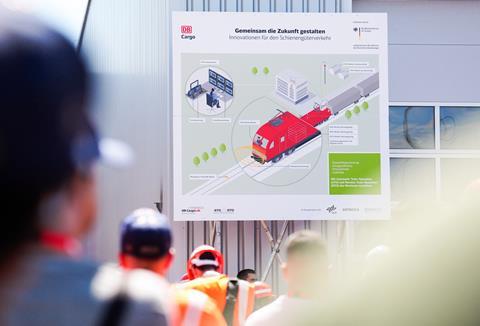
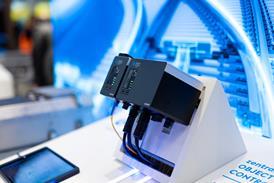
‘Automation is the key to using capacity more efficiently, reducing energy consumption and making rail freight more attractive, more powerful and more future-ready overall’, said Daniel Stoll, Project Manager at Hitachi Rail, which has supplied the onboard equipment and oversaw systems integration.
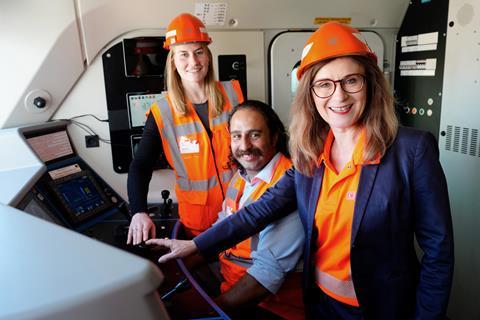
Chair of the DB Cargo management board Sigrid Nikutta said ‘the premiere of this automated locomotive is an important step for the future of European rail freight transport’, and self-driving locomotives could make more efficient use of track capacity and provide better quality services.
Federal Minister of Transport Patrick Schnieder said ‘automated driving relieves the burden on employees and, at the same time, creates sustainable jobs. This is precisely what we need to address the shortage of skilled workers and demographic change which affects rail freight transport. With this project, we are doing pioneering work for all rail freight transport in Europe.’