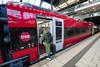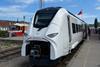







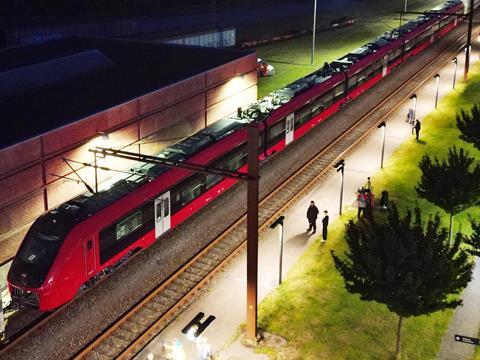
DENMARK: The first of the Alstom IC5 multiple-units order by national passenger operator DSB as part of its plans to switch to a fully-electric fleet by 2030 has arrived in Denmark for testing, with entry into service now expected from 2027.
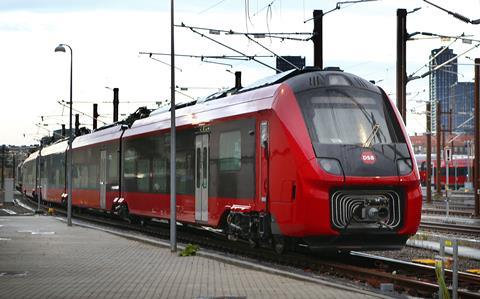
The delivery of the first IC5 ‘is a major milestone – not only for DSB, but also for the future of train traffic in Denmark’, DSB CEO Flemming Jensen said on September 18. ’It is visible proof that we are well on our way to a fully electric train fleet. This means more departures, and more comfortable and faster journeys for our customers.
‘The train still has to go through tests and adaptations before it can be put into service, but we are very pleased with how the project is progressing. The IC5 trains will not only replace the old diesel trains and help reduce CO2 emissions; a modern, uniform fleet based on IC5 trainsets will also make operation and maintenance of the trains much more efficient.’
Danish design inflences
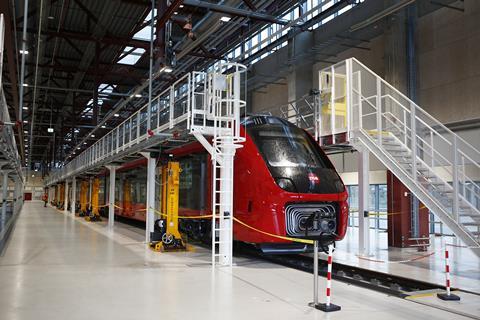
In June 2021 DSB and Alstom signed a framework agreement including a €1·4bn firm order for an initial 100 five-car 200 km/h IC5 EMUs to replace IC3, IC4, IR4 and Øresund trainsets on inter-city and regional services. A further 50 were ordered in June 2025.
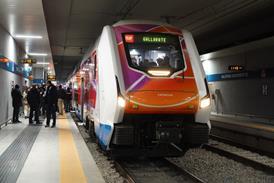
DSB was seeking a proven design following its experience with the troubled AnsaldoBreda IC2 and IC4 DMU fleets. The IC5 is part of Alstom’s customisable Coradia Stream family, which is in service in countries including Italy and the Netherlands. DSB said its version is adapted to Danish requirements including simple and functional design traditions, with a focus on a comfortable travel experience created with customer needs in mind.
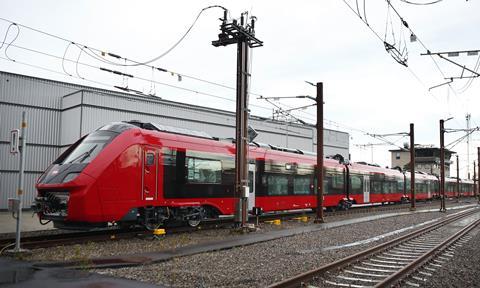
Production is underway at Alstom’s Salzgitter plant in Germany, and the manufacturer will maintain the fleet at depots being built in Aarhus and København.
The IC5 order forms part of a wider national rail investment programme which includes 25 kV 50 Hz electrification and resignalling.
- The European Railway Agency has approved the entry into service of the Talgo 230 EuroCity coaches which DSB has ordered for international routes. The first are to be used on limited trial services within Denmark in the coming months, before entering regular passenger service between København and Hamburg from the end of the year.