







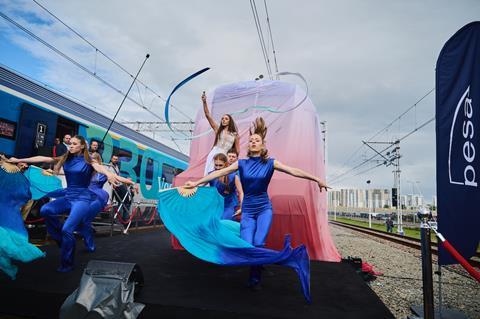
POLAND: Pesa Bydgoszcz unveiled the first locomotive from its Gama 3.0 family at the 16th Trako International Railway Fair in Gdańsk on September 23.
The electric locomotives can be fitted with either a diesel engine or a battery for last-mile operation, as well as use in ports, terminals and sidings. A dual-system version will also be available to operate on both the Polish standard 3 kV DC and other electrification systems.
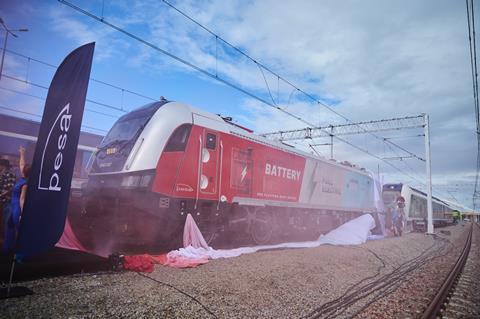
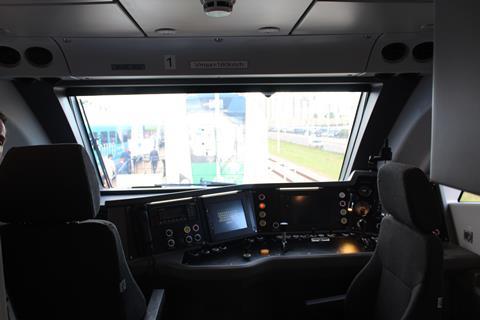
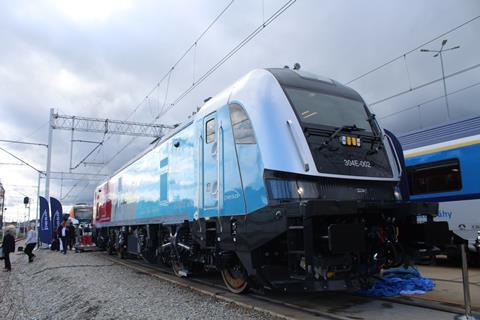
With a more streamlined appearance, the locomotive has been designed for both passenger and freight operation at up to 200 km/h. It features a larger driving cab, and can be equipped with kitchen and toilet facilities.
Pesa says the Gama 3.0 platform has been designed primarily to meet the requirements of the Polish market, while taking into consideration the standards and expectations of international operators, which would facilitate a smooth entry to the global market.
Production of the first locomotives is already under way at the company’s Bydgoszcz plant.
‘The Gama 3.0 locomotive is a continuation of the [Gama] 111Ed model used by numerous renowned Polish carriers’, explained Krzysztof Zdziarski, President of Pesa’s Management Board. ’Based on operational experience, market requirements, and our customers’ suggestions, we have designed a locomotive platform equipped with the latest technical solutions to ensure safe and comfortable operation.’
‘When designing the Gama 3.0 locomotive platform, we paid particular attention to vehicle service optimisation, to provide users with greater availability and shorter service downtime’, added the company’s Locomotive Sales Director Piotr Rościszewski. ’The locomotive’s modular design, easier access to components, and intelligent diagnostics will shorten inspection and repair times and increase fleet operational efficiency, which will translate into lower life-cycle costs for carriers.’