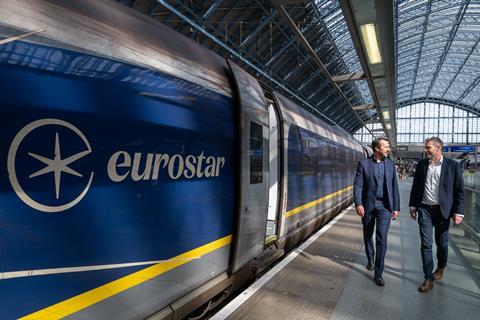
EUROPE: High speed line infrastructure manager London St Pancras Highspeed and operator Eurostar have signed a letter of intent to more than double international passenger capacity at London St Pancras station. A consortium led by architecture firm Hawkins\Brown has been appointed to conduct detailed studies.
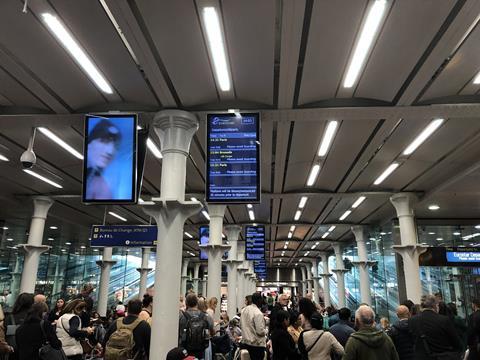
The letter of intent signed on July 3 follows an independent study commissioned last year which looked at how to handle future passenger volumes at the station, which has been struggling to cope with current flows and post-Brexit border requirements. Research commissioned by London St Pancras Highspeed has suggested that demand could increase from 11 million to 35 million passengers per year by 2040, with Eurostar looking to expand and new entrants seeking to launch cross-Channel services.
Phase one of the capacity expansion project will involve short-term improvements within the current footprint, including optimising security and border processes to accommodate an extra 2 700 passengers/h in the next three to four years.
Phase two will improve the international area and its connection to the main concourse to help passenger flows and more than double capacity to nearly 5 000 passengers/h. The conceptual stage and feasibility study is due to be finished towards the end of 2025, when formal design and construction plans are to be developed. Completion is planned by the end of 2028.
A third phase of the project planned for the 2030s would explore longer-term ways to enhance capacity, potentially including relocating the arrivals flow upstairs.
‘With growing passenger demand for international train travel, it is important that St Pancras International station is future-proofed and optimised’, said Richard Thorp, Chief Operating Officer at London St Pancras Highspeed. ‘With a shared ambition and collaborative approach, we can ensure our iconic station is ready to support this demand, and we’re looking forward to getting started on a new era of connectivity between London and Europe.’
Hawkins\Brown will collaborate with a multidisciplinary team including Ramboll (engineering), Momentum (pedestrian modelling), OFR (fire engineering), Montagu Evans (heritage consultancy), Gardiner & Theobald (quantity surveying), and Willmott Dixon Interiors (construction phasing).
‘This project perfectly aligns with our mission to be the partner for sustainable change through the enhancement of a key transport hub to provide a sustainable alternative to air travel’, said Ramboll director Ramani Armstrong. ‘This is a building that is beloved by many Londoners and travellers, and we are so excited to make the experience of all those who use it even more positive.’