UK: South Western Railway becomes the first contracted passenger train operator to pass to the public sector under the government’s nationalisation programme in the early hours of May 26, marking the beginning of the end of the privatisation era which began on the same routes with the launch of SWR’s predecessor South West Trains in February 1996.
Ahead of the handover, Secretary of State for Transport Heidi Alexander said this ‘marks a watershed moment in the government’s plan to return the railways to the service of passengers and reform our broken railways, ending 30 years of fragmentation. [It] delivers on our manifesto commitment to bring passenger services back into public control and put passengers firmly at the heart of the railways.’
The operation of more than 1 500 weekday services on routes from London Waterloo station transfers from the First MTR South Western Trains joint venture of FirstGroup and MTR Corp to South Western Railway Ltd. This is a subsidiary of DfT Operator Ltd, the public sector body that already operates LNER, Northern, Southeastern and TransPennine Express services; these were taken over for other reasons before the Passenger Railway Services (Public Ownership) Act 2024 was passed.
Incoming Southern Western Railway Ltd Managing Director Lawrence Bowman said ‘my immediate priority is to work with colleagues to develop a plan for SWR that will make the most of the new simpler industry processes to deliver improvements in reliability and an increase in capacity’.
Smooth transition
First MTR South Western Trains has been operating the services since 2017. FirstGroup said ridership reached a pre-pandemic high of 216 million/year, and has recovered to more than 165 million.
In a message to passengers, the outgoing operator said ‘although the legal operator is changing, your experience won’t. You’ll continue to see the same branding, same services and the same teams running your trains.’
Managing Director of FirstGroup’s First Rail business Steve Montgomery thanked the staff, and said ‘we are supporting DFTO to ensure a smooth transition and we wish passengers, partners and colleagues every success for the future.’
General Secretary of the RMT union Eddie Dempsey said ‘public ownership of South Western Railway is a major step forward and is a clear rejection of the failed privatisation model’. The union called for an end to the outsourcing of up to 400 cleaning, security and gateline roles to ‘private profiteers’, saying ‘the job is incomplete when our contracted-out members remain outsourced and not reaping the benefits of nationalisation’.
Great British Railways legislation
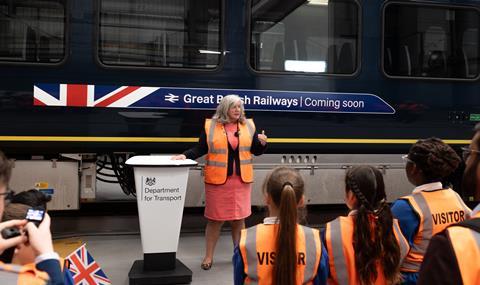
All passenger services operating under Department for Transport contracts are due to transfer to public ownership by the end of 2027, with c2c next on July 20 this year followed by Greater Anglia on October 12. Services are being transferred as the existing operating contracts reach the end of their minimum term, or where they can be ended early, so there is no cost involved.
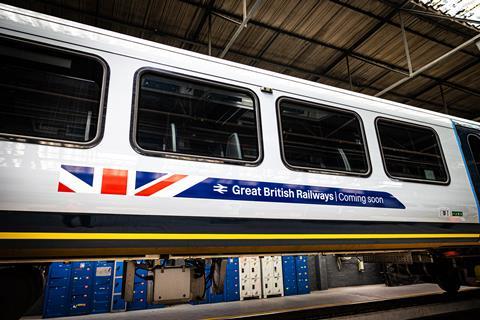
The operations will eventually transfer into Great British Railways once it has been established as the ’single directing mind’ for the railway, consolidating 14 passenger train operating companies, Network Rail and DFTO into a single organisation. Freight and open access services will not be nationalised, and devolved arrangements will continue.
The required legislation is to be laid in this parliamentary session, with GBR expected to be operational around 12 months after the bill receives royal assent.
Speaking at SWR’s Bournemouth depot on May 22, Alexander said each operator would have to meet standards for punctuality, cancellation and passenger experience before being branded as GBR. ‘I know that most users of the railway don’t spend much time thinking about who runs the trains — they just want them to work’, she said. ‘That’s why operators will have to meet rigorous performance standards and earn the right to be called Great British Railways. We have a generational opportunity to restore national pride in our railways and I will not waste it.’
In a written statement to parliament Alexander said ‘public ownership will ensure services are run in the interests of passengers, not shareholders, and is a vital step in enabling the government to bring track and train together’.
But she warned that ‘public ownership alone is not a silver bullet and will not fix the structural problems hindering the railways currently. That will take time.’