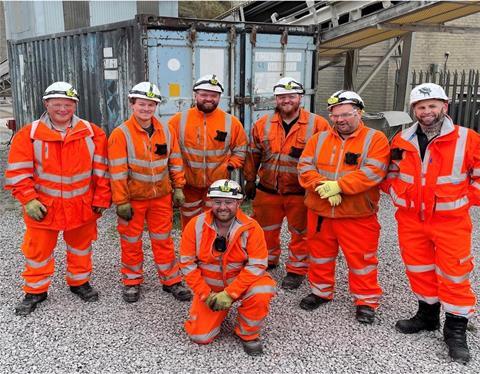
UK: Rail logistics, terminal, shunting and train preparation services company Victa Railfreight says it has achieved a 75% reduction in adverse safety events through the use of body-worn cameras and unobtrusive monitoring.This helps the company to observe work as it is performed in real-world working environments rather than under the eye of an assessor.
As a result, the company has been able to identify gaps in the application of non-technical skills and knowledge, allowing meaningful interventions to reduce the risk of incidents. Managing Director Debbie Simmons said ‘these initiatives are not about surveillance — they’re about learning, protection and continuous improvement’.
Safety & Compliance Manager Rob McKittrick added that ‘it is recognised that assessment conducted obtrusively whereby the assessor and candidate are very much present has its limitations. The candidate will always perform differently when being actively observed — it’s human nature to do so. The initiative to introduce more unobtrusive assessments allowed our assessors to monitor the correct application of safety control measures in a real working environment and provided an accurate picture of the activity being undertaken.’
The introduction of body-worn cameras for all staff undertaking safety-critical tasks followed workforce engagement, training and a comprehensive data protection impact assessment.
Since the final cameras were issued in June 2025, Victa Railfreight’s 30 operatives have completed 13 781 recordings, capturing more than 2 500 h of safety-critical activity. Footage is primarily intended to support incident investigation and provide clear, factual evidence to underpin robust root cause analysis. While it is not routinely reviewed, the company says the presence of cameras has had a clear and positive influence on behaviour, reinforcing compliance and safe working practices. It says the cameras also provide protection for employees by removing ambiguity during investigations and accurately capturing working conditions, particularly for staff who often work unsupervised or in challenging environments.
McKittrick said ‘we have a far more accurate and factual view of safety-critical activity. This has allowed us to address risks earlier, reduce habitual errors and, most importantly, protect our people while driving a genuine improvement in safety performance.’