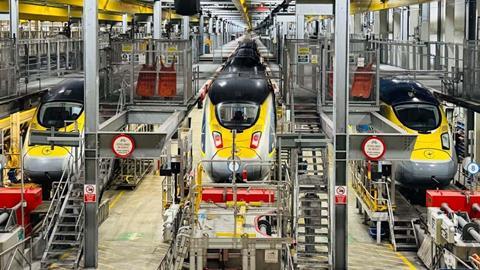
UK: The rail regulator has approved Virgin Trains’ application for depot access which it needs under its plans to launch high speed passenger train services from London through the Channel Tunnel to Paris and Brussels from 2030.
Rival applications from Evolyn, Gemini and Italian national operator Trenitalia were rejected.
The Temple Mills depot in east London is the only UK facility suitable for the light maintenance of high speed trains built to a larger continental profile. It is owned by High Speed 1 infrastructure concessionaire London St Pancras International Highspeed, and currently only used by incumbent train operator Eurostar.
Following multiple applications for access rights under section 17 of the Railways Act 1993, the Office of Rail & Road commissioned a study by IPEX which concluded that there is only space for one new operator at the depot.
Reasons for ORR’s decision
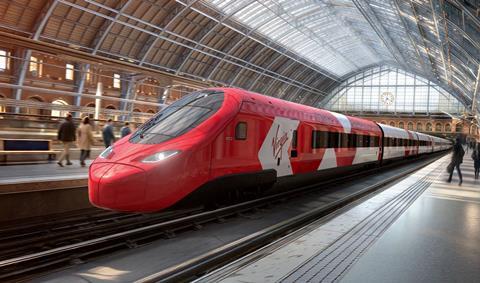
Announcing its decision to select Virgin Trains, on October 30, ORR said it had weighed its duties to promote the use and development of the rail network to the greatest extent that it considers economically practicable, and to promote competition.
ORR said there is ‘wide public interest in the development of competition’, and there should be a ‘high bar’ to showing that capacity cannot be made available.
The regulator decided that the depot has capacity available for Virgin Trains’ plans and it was the new entrant with the strongest prospects of making the best use of it.
ORR said Virgin Trains’ application offered higher potential benefits than Trenitalia or Eurostar’s proposals, and overall its plans were more financially and operationally robust than those of the other applicants. The proposition had clear evidence of investor backing and an agreement in principle to deliver appropriate rolling stock; Virgin plans to order 12 Alstom Avelia Stream trainsets.
ORR said there was a lack of clarity about how Gemini would fund its rival plan to use Stratford International station, and the regulator was ‘less confident about Evolyn’s financial viability as there is uncertainty in how the project would be structured and funded, and in its short-term financial projections’.
However, ORR noted that this lower confidence in plans from Evolyn, Gemini and Trenitalia was ‘not sufficiently concerning on its own to preclude approval of their applications’.
| ORR access decision timeline | |
|---|---|
| Depot access applications | |
| Evolyn Mobility | August 23 2024 |
| Virgin Trains Europe Holdings | October 23 2024 |
| Gemini Trains | February 28 2025 |
| Trenitalia France | March 28 2025 |
| Eurostar depot use expansion plan | July 18 2025 |
| ORR depot access application review process | |
| ORR launches a consultation on an independent report from IPEX, commissioned by ORR, which said some capacity could be made available at Temple Mills | March 28 2025 |
| After considering evidence from stakeholders, ORR announced that the IPEX report was an accurate reflection of capacity at Temple Mills, saying that there was enough capacity for one additional operator or for Eurostar to grow. | June 5 2025 |
| ORR announces decision in favour of Virgin Trains | October 30 2025 |
Stakeholders welcome competition
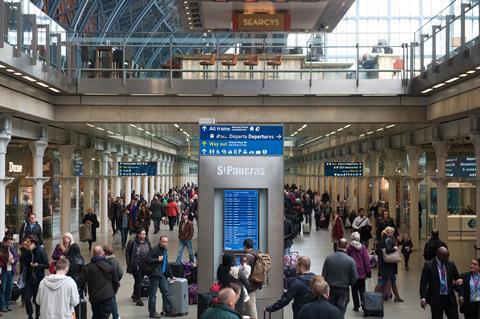
ORR said stakeholders who engaged formally with the process had ‘overwhelmingly’ supported the introduction of competition on UK–EU train services and called for ORR to take decisions that facilitate it. It noted ‘in particular the views in favour expressed by the Rail Minister’.
Martin Jones, ORR Deputy Director, Access & International, said ‘we are backing customer choice and competition in international rail, unlocking up to £700m in private sector investment and stimulating growth. While there is still some way to go before the first new services can run, we stand ready to work with Virgin Trains as their plans develop.’
ORR also received submissions regarding the reopening of Ashford and Ebbsfleet stations in Kent, which Eurostar no longer serves.
However, the regulator stressed that its decision strictly concerns access to Temple Mills depot, and it cannot require Virgin Trains to run specific services or stop it from changing what destinations it plans to serve.
HS1 has significant capacity
Commenting on the ORR announcement, Rail Minister Lord Peter Hendy said ’allowing Virgin Trains to share this vital facility will give passengers greater choice, better value and improve connectivity for millions, as well as drive innovation, lower fares and promote greener connections with Europe’.
Hendy said the government ‘will also continue to champion the reopening Ashford and Ebbsfleet International stations as a priority to restore full connectivity, support tourism and boost growth across the region’.
Eurostar told Rail Business UK it was ‘reviewing the decision and considering our next steps to ensure we can continue to grow’. It said ‘our priority is to deliver for passengers the benefits of the investments in a new fleet, jobs and depot facilities that we recently announced’.
Gemini CEO Adrian Quine said ‘we are disappointed not to be successful in our application to the ORR, and we wish Virgin the best of success in offering international rail customers choice and value. We created a unique alliance of experts and major transport organisations, and we will consult them to seek other ways of bringing the Gemini service to the UK and Europe.’
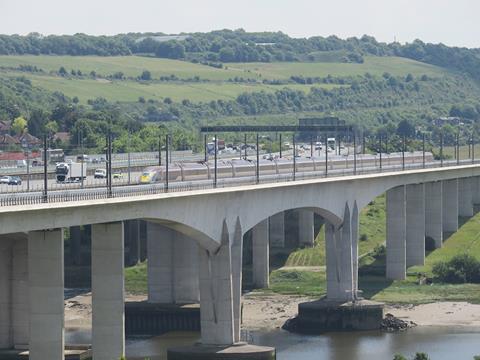
A spokesperson for London St Pancras Highspeed told Rail Business UK ‘today’s announcement marks the most significant step forward in recent years for expanding international rail. This is a win for passengers, a win for the planet, and a win for the economy. Our high speed line has significant capacity available for more train services, so we are very pleased with the ORR’s decision. It will bring more choice, more trains, and new destinations for passengers.’
Jason Geall, EVP of SME at American Express Global Business Travel, said Eurostar currently accounts for 74% of business travel trips between the UK and France and 21% between the UK and Belgium.
He said ‘opening the Channel Tunnel to additional operators will help make rail an even more attractive option for business travellers on this vital route. This could unlock significant benefits, including increased sustainability gains through shifts from air to rail, productivity improvements as business travellers can work effectively while in transit, and enhanced connectivity that supports both UK and EU economic growth.’