


EUROPE: Austrian open access operator Westbahn says the European rolling stock market as an ‘oligopoly’ dominated by a few manufacturers, leading to reduce choice, long delivery times and high costs. However, the European supply chain has called for action on what it sees as unfair competition from China.
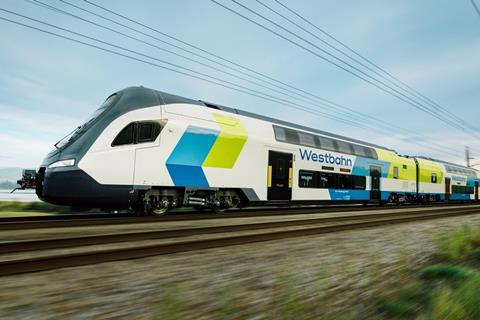
‘Anyone wanting to buy trains today has hardly any choice, waits for years and pays an exorbitant price dictated by the lack of competition’, according to Westbahn, which says the European rolling stock market as an oligopoly dominated by a few manufacturers.
‘New trains are scarcely available, as waiting times now stretch to many years. At the same time, prices are skyrocketing, while individual requests and innovations in features or quality are virtually impossible to implement’, the Austrian-headquartered open access operator said in a strongly-worded statement released on November 7. It believes that the EU rail market consists of two major manufacturers from France and Germany [Alstom and Siemens Mobility], plus one growing supplier from Switzerland [Stadler]. It said the consequences of this ‘market failure’ are expensive trains, a lack of innovation and long delivery times which affect all operators and thus all passengers.
Westbahn said ‘as long as there is no functioning competition, prices remain high, the selection limited and delivery times long. European manufacturers’ capacities are fully booked for the next few years’.
Chinese trains
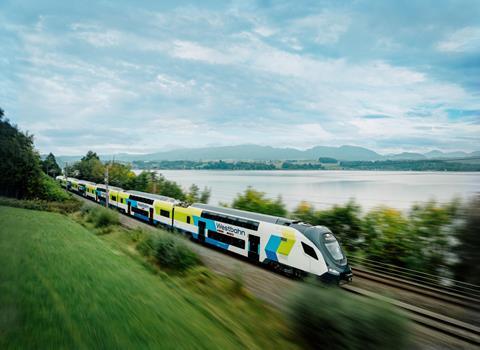
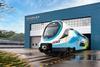
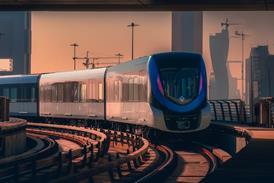
The statement was issued four days after Westbahn announced that it would shortly begin putting into passenger service four CRRC Zhuzhou double-deck electric multiple-units which it is to lease from the Chinese group under a deal first announced in December 2019. The first of the EMUs entered service on November 12.
The Chamber of Labour, the statutory representative body for employees in Austria, described Westbahn’s use of Chinese trains as a ‘breach of the dam’ that ‘endangers a key Austrian industry, future jobs and the crisis resilience of the railway’. However, the operator responded that this analysis was ‘factually incorrect and economically short-sighted’.
Westbahn said its four new EMUs ‘are completely insignificant in the context of a total European market with thousands of vehicles’, and ‘will not revolutionise the European market. But they can provide impetus for greater competition, innovation and future viability in the rail sector.’
New suppliers bring competition
Westbahn said ‘the entry of new suppliers is an opportunity: only through competition can shorter delivery times, technological advancements and fair prices be achieved’.
It added that ‘political interference and market protectionism lead to stagnation — to the detriment of passengers and taxpayers. Genuine competition strengthens the European rail industry and keeps it internationally competitive.’
The European supply industry responds
Asked by Railway Gazette International to comment on Westbahn’s claims, European railway suppliers’ association UNIFE said the use of Chinese-made rolling stock in Europe ‘demonstrates the urgent need for political action and corrective measures’ to ensure ‘the preservation of the competitiveness of our European industry in a rapidly changing economic and geopolitical world’.
UNIFE said ‘protecting our industry, our autonomy, security and our jobs is of paramount importance, especially in light of unfair methods and practices employed by certain non-European competitors, in particular state-owned. There is ‘very lively’ competition among European rail vehicle manufacturers, it said, insisting that ‘we can also say with a clear conscience that the market outside our association is even larger, both in the European and international segments’.
UNIFE said the industry is working to reduce costs, and harmonisation of national rules and reducing operators’ individual requirements would help through economies of scale. Reliable forecasts of future orders would ensure availability and reduce waiting times. ’Competition also has to be fair. European businesses adhere to strict safety, social, and environmental regulations. They create sustainable technology, train apprentices, carry out research and pay fair wages. This should be the case for all economic operators, especially in a sector such as rail which provides public services to citizens’, the association insisted.