








USA: In the face of federal funding challenges, the California High Speed Rail Authority has outlined options to accelerate delivery of its ‘Bay to Basin’ line by 2039, while simultaneously launching a $507m procurement process for track materials to begin installation by 2026.
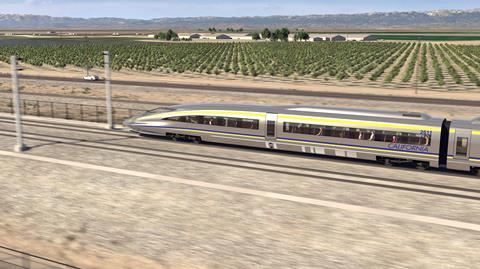
In the face of the Trump administration’s efforts to defund the scheme, the promoters of the California high speed rail programme have set out options for funding and accelerating delivery of the ‘Bay to Basin’ line.
On August 22 the California High Speed Rail Authority issued a ‘supplemental’ project update aimed at state legislators, setting out what it termed a ‘clear path forward to connect the high speed rail system to northern and southern California via the Central Valley by 2039. The plan, contingent on sufficient, long-term funding, will achieve commercial success at the earliest possible stage’, CHSRA said.
The proposals are intended to give certainty to potential PPP investors in the project, while balancing the funding available from non-federal sources with the authority’s remit to create a high speed railway linking San Francisco with Los Angeles and Anaheim.
The report presents three potential delivery scenarios. These are:
- Merced – Bakersfield: Complete the current statutorily required segment under design and active construction. The 275 route-km high speed section would enhance rail services in the Central Valley.
- San Francisco – Gilroy – Bakersfield: Build high-speed rail infrastructure extending from the Central Valley to Gilroy and collaborate with partners to enhance the Gilroy – San Jose rail corridor to allow through services from San Francisco to Bakersfield.
- San Francisco – Gilroy – Palmdale: Build an expanded high speed rail route from Gilroy to Palmdale that supports continuing service to San Francisco and connects with LA Metrolink commuter rail trains at Palmdale, while using the High Desert Corridor to connect with proposed Brightline West service to Las Vegas and Rancho Cucamonga in Victor Valley.
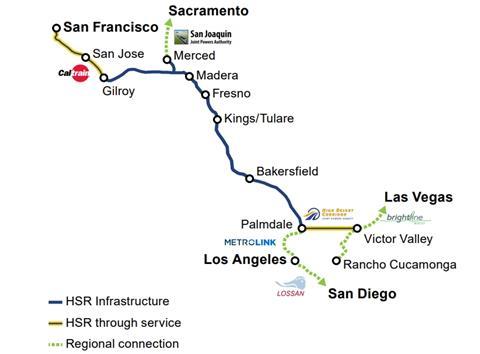
In its conclusion, the authority says it is statutorily obligated to prioritise delivery of the Merced – Bakersfield segment‚ and it plans to do so unless otherwise directed by the state legislature. However, it added that completing the Gilroy – Palmdale segment would provide state-wide rail service to a majority of Californians and promises the highest return on investment for the state. Meanwhile, completing the Gilroy – Bakersfield scenario would be a cost-effective way to achieve profitable commercial operations at the earliest possible opportunity with less additional funding needed.
‘The Gilroy – Bakersfield scenario would attract substantial ridership and generate positive net proceeds. A profitable operation could create considerable opportunities for engaging with the private sector through a P3 delivery model’, the report explained.
Sprint to start tracklaying
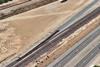
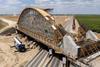
Alongside its work to assess how best to deliver the rest of the programme beyond the Initial Operating Segment, CHSRA is also ramping up efforts to start tracklaying on the sections of alignment now nearing completion.
On August 28, the authority announced the start of procurement of track and railway systems for a 191 km section of the IOS in the Central Valley. CHSRA said six separate notices would be issued confirming the start of procurement of the various lots, which include rail, sleepers, overhead electrification masts, optical fibre cabling and ballast. The total approved value of the procurement is $507m, spread over multiple anticipated contract awards with lead times ranging from six to 12 months. CHSRA said ‘all materials will be newly manufactured goods and compliant with the Buy America and the Build America, Buy America Act’.
The speed of the planned procurement has prompted surprise among track specialists, with one source familiar with the Californian project noting that currently only one supplier of turnouts with a presence in North America would be able to fulfil these terms.

The fact no tracklaying has yet taken place has been cited recently by Federal Transportation Secretary Sean Duffy and others close to the Trump administration as evidence of the failure of the Californian project. The authority’s push to begin laying track in 2026 is widely seen as a response to these attacks.
‘Purchasing the track and materials needed to launch the nation’s first high speed track and systems installation within the next year is a major milestone’, said CHSRA Chief Executive Ian Choudri when the procurement was launched. ‘The procurement will not only accelerate construction of high speed track, but by purchasing directly from American manufacturers, we will deliver significant savings to the state.’
However, industry insiders report that a contract for Systra to design the track and overhead electrification systems was only let in June this year, and this design stage could last up to two years for a ballasted trackform. This has prompted scepticism about the potential for tracklaying to begin in 2026.