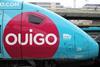











FRANCE: National operator SNCF has unveiled a further expansion of its Ouigo low-cost passenger operation, including a service linking Lyon with Bordeaux.
SNCF presented the plans at Paris Lyon station on November 27, when it said it expects to achieve a record Ouigo ridership of 25 million passengers in 2025. It reported that half of Ouigo tickets sold cost less than €30, and it reiterated its goal for Ouigo to capture 30% of the French high speed rail market by 2030, thanks to a 30% increase in passenger volume and 30% more sets.
Looking forward, among the most eye-catching plans to grow the brand is the launch from mid-2027 of a Bordeaux – Lyon service using high-density TGV trainsets. One daily return service is envisaged, operating via Massy-TGV in the suburbs of Paris, Saint-Pierre-des-Corps (Tours), Poitiers and Angoulême, with a journey time of approximately 5 h. The announcement has already proved controversial with policymakers and rail advocates in the southwest because of the decision to route the train via the high speed network and the Paris suburbs, rather than via the largely rural but more direct conventional routes through or the Massif Central.
One of the legacy routes between Bordeaux and Lyon via Limoges remains formally open to traffic, but in reality the poor condition of the track on several sections means it is not seen as a viable option for an inter-city service. The co-operative start-up Railcoop had hoped to operate a train between the two cities under open access rules using this corridor, but the venture never secured sufficient funding to launch services.
SNCF hopes the Ouigo service could carry up to 1 million passengers annually. ‘This is a route with strong demand for an alternative to cars and planes’, said Jérôme Laffon, CEO of Ouigo. ‘Today, we are truly engaged in a modal battle on this route.’ Responding to criticism about the choice of route, Alain Krakovitch, head of the TGV-Intercités business unit, said SNCF was ‘not in a position to respond with a TGV via the Massif Central’, before referring further questions about the state of the infrastructure in the area to the local authorities.
Expansion starts now
The further roll-out of Ouigo services will start with the December timetable change, when a daily Paris – Hendaye service is to be added to the offering. Through 2026, a third daily return service will be added on the Paris – Rennes route, while more trains will also run each day between Paris and Montpellier and between the capital and Lyon.
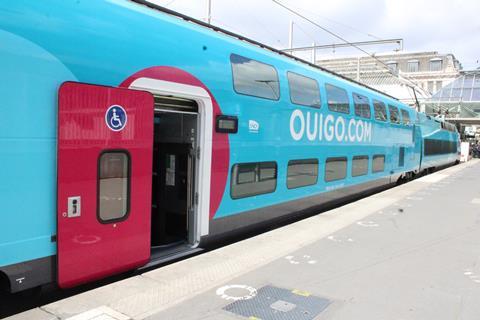
Further ahead, SNCF is looking at options to increase the Ouigo service linking Paris with Strasbourg, and it is considering launching a Ouigo option between Paris and Lille, a route on which there is already intense competition from low-cost road coaches, Krakovitch said.
The Ouigo TGV fleet is expected to reach its full allocation of 50 trains by the end of 2027; an initial three Duplex Tango refurbished trainsets are due to be in traffic with the operator by the end of this year.
The uniforms worn by Ouigo staff are also due to be revamped in 2026, SNCF told guests in Paris. The refreshed wardrobe supplied by domestic company Armor-Lux will include a sleeveless jacket, a redesigned hat for female crew, and new trousers for summer.
- SNCF’s Ouigo subsidiary in Spain is expected to turn a profit for the first time in 2025, having been able to run its full service as planned between Madrid and Sevilla since the start of the year.