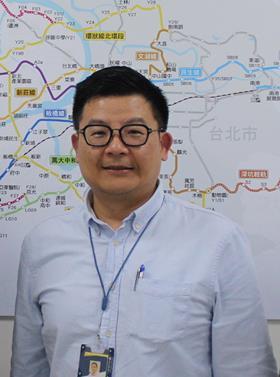
Tasked to operate two light rail and one metro line with one more metro and light rail under construction, New Taipei Metro Corp President Kuo-Chi Wu explains to Benjámin Zelki why he sees the key for success as a very lean organisation and keeping fares down.
The government of New Taipei City was founded in 2010 as a separate administrative entity covering a ring surrounding the core of Taipei City. The administration put forward an ambitious plan to catch up with the city core’s much more developed metro network and set up New Taipei Metro Corp in 2018 as its own organisation to operate the new lines.
‘Our lines function as feeder routes to the existing lines of Taipei Rapid Transit Corp. Despite with its 4 million inhabitants New Taipei is the most populous municipality of Taiwan, we have a much lower population density in our area‘ Kuo-Chi Wu has told Railway Gazette International in New Taipei on May 28.
A fast-growing network
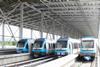
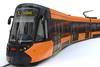
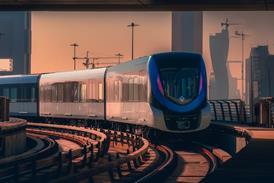
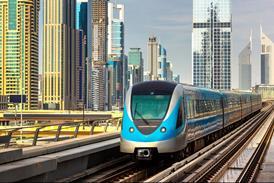
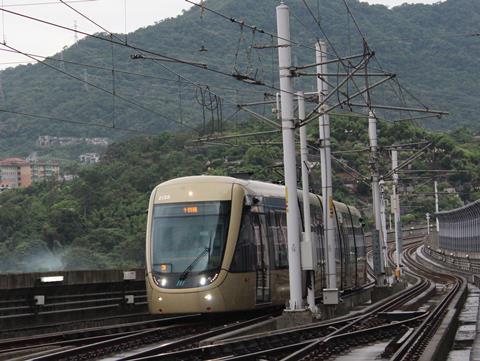
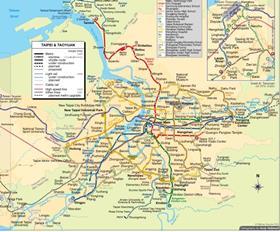
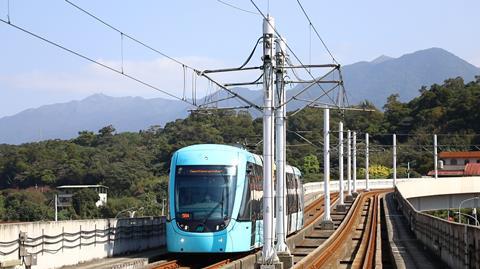
NTMC currently operates two light rail lines; the 9·5 km Danhai LRT consists of the Green Mountain Line, which opened in December 2018, and the Blue Sea line, operating since November 2020. These radiate from the Hongshulin station of the Red metro line in the north.
The 7·5 km Ankeng LRT opened in February 2023, linking the Shisizhang station of the Circular Line to Shuangcheng in the south of the conurbation.
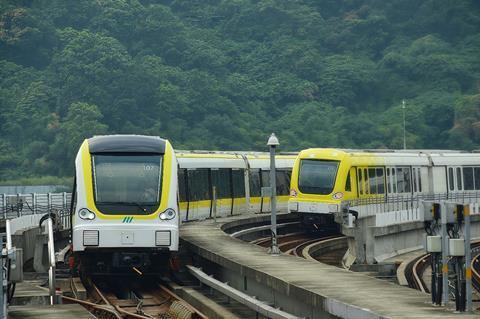
The only operational metro of NTMC is the Circular Line, which’s first section opened in January 2020 linking Dapinglin on the Green Line of Taipei Metro to the New Taipei Industrial Park station of the Taoyuan Airport MRT. It is currently under extension at both ends.
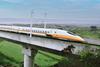
NTMC is working to start operations of the 14·3 km automated Sanying (Light Blue) Line metro in the southwest of the urban area in the first quarter of next year. The New Taipei City government started construction on the 5·6 km Xizhi-Donghu line in the east of the conurbation in March, which will also be operated by NTMC.
New Taipei Model
‘We only have a medium capacity network, either light rail or metro lines. It is very challenging for us to make our operations financially feasible. Our total ridership on the Danhai and Ankeng light rail lines, and the operational phase of the Circular Line metro is 100 000 passengers on an average day as of this May. As a comparison, Taipei Metro’s ridership was around 2 million passengers a day the same time, resulting that we have a much lower ticket revenues than Taipei Metro.’
But to ensure passengers are not treated differently, the government of New Taipei City decided to offer the same fares as TRTC, with a single journey ticket ranging between NT$20 and NT$65,‘ Wu says.’
‘Then we calculated the reasonable operational cost for each journey for us and reached an agreement with the government of New Taipei City to give us subsidy to augment the gap between the reasonable and actual fares.
However, NTMC has other sources of incomes including advertisements, and renting out shops and facilities at stations.
‘To support feasible operations with this low ridership and therefore smaller revenues, we decided to develop a different model compared to Taipei Metro, what we call as the New Taipei Model’, Wu explains.
‘We made sure to create much less divisions compared to TRTC, therefore our management staff is also much leaner, resulting in a reasonably quicker decision making process. This also lets us to use less employee, each of who are responsible for more areas.’
Automation and locally sourced spare parts
‘We are committed to use a high level of smart technology, automation and artificial intelligence to reduce employee workflow. We also introduced several no-staff stops on the two light rail lines to further reduce staff need’, says Wu.
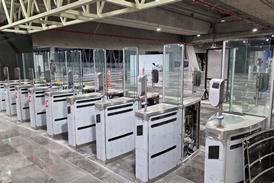
‘We are working with domestic suppliers to source spare parts locally to further rationalise expenditure. For example, purchasing one set of sliding door for a Circular Line platform screen door from the original supplier cost us NT$550 000. While we now can source the same glass for maintenance from the local market for NT$40 000, so 14 times cheaper.
Keeping fares attractive
‘We have a very high private vehicle usage in New Taipei City unfortunately, as residents at many areas haven’t got access to rail mass transit lines so they got used to drive their own vehicles. Now it is very difficult to persuade them to change their habits and switch to the new metro and light rail lines,’ Wu says.
‘We see the low prices as the main catalyst to encourage users to shift to our services. And it is pretty successful so far, as the ridership on our three operational lines is steadily growing, with an average rate of 4% per quarter.’
- Read the full interview in the August issue of Railway Gazette International.