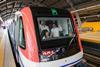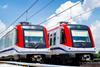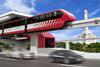
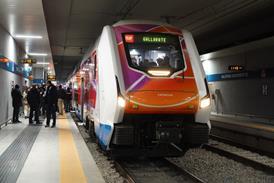






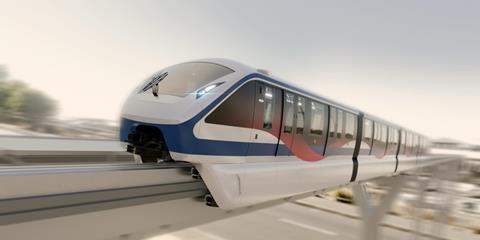
DOMINICAN REPUBLIC: Mass rapid transit project promoter Fitram has called tenders for the detailed design and construction of civil works and railway systems for the first phase of the Santo Domingo monorail project.
The call for tenders on September 9 follows President Luis Abinader’s announcement about the realisation of a monorail scheme in the Dominican capital in three phases. Bids are to be submitted by October 23.
The first section of the monorail is to run for 10·5 km and serve 12 stations. It would start at the Centro Olímpico complex in the centre, providing interchange to metro lines 1 and 2, and run to Av. Charles de Gaulle in the east, following the Avenida 27 de Febrero and Las Américas motorways.
In the second phase, it would run 7·5 km west from Centro Olímpico to Pintura, further following Av 27 de Febrero.
In the third phase, it is to be extended with another 7·2 km following Prolongacion Av 27 de Febrero to the intersection of the Duarte motorway, where interchange is to be provided to the extension of metro Line 2, which is currently under way.
Following completion of the first phase, the line is to serve an area with a population of over 1 million inhabitants, and is expected to be used by 306 000 passengers a day.
Initially the line would be operated by four-car units with a capacity of 562 passengers. Running at a minimum interval of 90 sec at peak times, this would give a capacity of up to 22 480 passengers per hour per direction. The line will be designed to accommodate six-car sets to increase capacity to meet future demand.
35% cost saving estimated
A suburban rail project branded Tren Metropolitano was earlier announced on an alignment sharing long sections with the monorail plan, but the bidding process was cancelled in last November, with the aim of restructuring the scheme as a public-private partnership.
The President’s office said on August 28 that the monorail option was selected because of the estimated 35% cost savings compared to other rail systems.