








EUROPE: Rail bodies have given a warm welcome to the provisional budget issued by the European Commission for the past-2027 period.
The draft budget includes retention of the Connecting Europe Facility, the EU’s key infrastructure investment vehicle, the future of which had been the subject of speculation over recent months. Within the €1·8tr post-2027 Multi-Annual Financial Framework, the Commission has proposed a dedicated budget line for European transport with a newly configured CEF. This would ensure continued EU support for the rail sector and reiterate the EU’s commitment to its goal of completing the TEN-T Network.
Welcoming the proposals, the Community of European Railways & Infrastructure Companies’ Executive Director Alberto Mazzola thanked the Commission for ‘the solid foundation of support for transport that we find in the planned EU budget. The Commission’s decision to continue the Connecting Europe Facility beyond 2027 reflects a clear commitment to completing the TEN-T network and recognises the urgency of the task in the current geo-political context. The objective is within reach, but to ensure we get there, the rail sector has been calling for €100bn in CEF funding. We therefore count on the co-legislators to raise the ambition of the CEF endowment accordingly.’
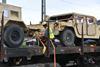
Supply chain trade body UNIFE also welcomed the draft budget, and emphasised the importance of military mobility within the revamped CEF funding stream, noting that this accounted for €18bn on top of the €51bn core allocation to transport projects. This sum marked a doubling in the value of grants available under the current iteration of the facility.
‘This EU budgetary framework has the right architecture and we are glad to see efforts to simplify and improve access to finance’, said UNIFE Director-General Enno Wiebe. ‘In times of geopolitical stress on Europe through security concerns, climate change and various economic challenges, we need to work together to maximise dual-use benefits in any military mobility investments, and stakeholders need to take seriously the role that rail can play in advancing in Europe’s preparedness.’
The budget framework will now be subject to two years of detailed scrutiny and potentially challenging negotiation between the EU institutions and member states, with the final agreement taking effect from 2028 and running for seven years. A spokesman for German Chancellor Friedrich Merz said on July 17 that ‘a comprehensive increase in the EU budget is unacceptable at a time when all member states are making considerable efforts to consolidate their national budgets. We will therefore not be able to accept the Commission’s proposal.’