
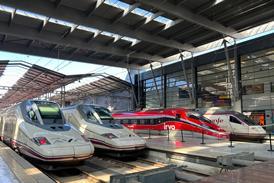






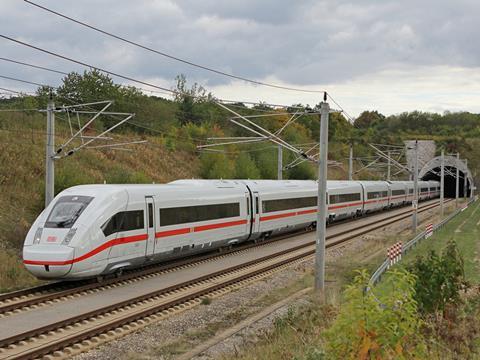
GERMANY: The remotely controlled operation of an ICE4 high speed trainset is to be tested by a consortium of industrial, operating and academic partners as part of the RemODtrAIn project which aims to make train movements within maintenance depots more efficient.
‘Our goal is to develop a pragmatic solution for remote-controlled train operations by closing specific technological gaps and to consider necessary adjustments in roles, processes and regulations’, said Dr Jasmin Bigdon, Chief Technical Officer at Deutsche Bahn. ‘The close integration of technical solutions and real-world application on-site is the focus of our actions.’
Through remote controlled depot operations, ‘we aim to increase capacities, make processes more flexible, alleviate staff shortages, and thus achieve tangible operational improvements quickly for customers and our employees’.
The €17m RemODtrAIn (Remote operated train with AI based Obstacle Detection) project is backed by the European Union and Germany’s Federal Ministry for Economic Affairs & Energy, and builds on previous projects such as AutomatedTrain and safe.trAIn.
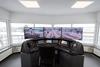
The 12 partners aim to develop a secure and robust 5G-based remote control platform comprising a compact control unit for the remote operator, onboard equipment for the train and a cloud-based fleet management system. The intention is that the remote control system could be integrated into new vehicles or offered as cost-effective retrofit for existing fleets.
Remote control testing will be caried out in an operational environment at Köln-Nippes ICE depot. The 5G communication technology will be tested at the Smart Rail Connectivity Campus in Annaberg-Buchholz using a Desiro Classic multiple-unit.
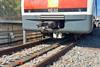
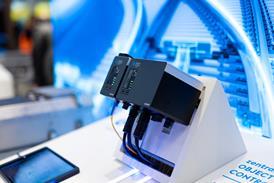
Modular AI-supported obstacle detection will also be tested in real operating environments, including on the Berlin S-Bahn.
The vehicle testing and validation phase is scheduled for 2028, enabling the development of specifications for subsequent use in real operations.
Siemens Mobility is responsible for specifying and developing the remote control system, as well as for integration and practical testing. Marc Ludwig, CEO for Rail Infrastructure at Siemens Mobility, said ‘we are developing solutions that are not only technologically advanced but also precisely tailored to the current requirements of rail operations’.
DB Systemtechnik is providing system engineering, architecture, safety and cybersecurity expertise, as well as experience in standardisation and approval.
Rheinmetall subsidiary MIRA is developing the control panel that the remote operator will use, with subcontractor Cattron working on vehicle interfaces. ‘We are passing our system expertise from road mobility to rail transport’, said MIRA Managing Director Win Neidlinger on January 16. ‘Remote-controlled trains in workshops and depots increase efficiency, reduce staff workload and lay the foundation for further automation steps in the railway sector — safely, economically and scalable.’
| RemODtrAIn consortium |
|---|
| Siemens Mobility |
| Siemens |
| DB |
| DB Fernverkehr |
| DB Systemtechnik |
| DB RegioNetz Infrastruktur |
| Mira |
| Smart Rail Connectivity Campus |
| Deutsches Zentrum für Luft & Raumfahrt |
| Technische Universität Berlin |
| Technische Universität Chemnitz |
| Technische Universität München |