This week’s news from the global railway supply chain.

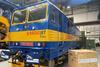
ČMŽO Elektronika has completed the first installation on a locomotive of an ETCS onboard unit produced by the Angelstar joint venture of Stadler and MerMec. ČMŽO Elektronika said this follows intensive technical preparation with Angelstar, Siemens Mobility and TrameCo Systems.
The Hungarian state is to regain majority ownership in the Dunakeszi Járműjavító repair plant. Minister of Construction & Transport János Lázár announced on November 21 that national railway group MÁV is to purchase a majority stake in the firm. DJJ is currently subject to bankruptcy proceedings.
Following a ‘steady growth’ in rail projects, Mosdorfer Rail has expanded its existing facilities at Granollers in Spain by 1 000 m², to enable it to optimise workflows, improve material storage and streamline order preparation.
Mutares has completed the acquisition of M3 Group, a Swedish company providing construction machine rental services in the rail, metro and road sectors. The transaction is an add-on acquisition for GDL Anläggning & Miljö in the Infrastructure & Special Industry segment.
Applications to join the Australasian Railway Association’s 2026 Future Leaders Programme close on December 12. The programme, which is available only to ARA member organisations, is for people aged 35 years and under, and will feature three major workshops, executive sponsorship, site visits, webinars, peer learning and a national alumni network.
Félix Fernández has been appointed CEO of CAF USA, with overall responsibility for both the rail and bus segments in the USA and Canada and overseeing industrial operations in the USA.
At the Institute of Land & Sea Transport at TU Berlin, Dr-Ing. Beate Bender has taken over as head of the Department of Rail Vehicles. She succeeds Prof Dr-Ing Markus Hecht, who had led the department since 1997. Under Hecht’s leadership, numerous research and industry collaborations were established in the fields of running gear, acoustics, and energy efficiency. As an expert serving on various committees, Hecht will remain active in the rail sector even after retirement. Bender earned her doctorate in 2001 and subsequently worked for Bombardier Transportation from 2001 to 2013 in bid management, engineering, project management and product management, where she was responsible, among other projects, for the development of the Talent 2 EMU platform. Since July 2013, she has headed the Chair of Product Development at Ruhr University Bochum.
Vossloh has placed promissory note loans with a total volume of €600m, with the funds mainly to be used to refinance the purchase price for the acquisition of concrete sleeper manufacturer Sateba. The original plan was to use the funds exclusively to repay the bridge financing incurred as part of the Sateba acquisition. but owing to high demand and attractive terms, the placement volume was significantly expanded so that, in addition to the bridge financing, the long-term loan originally used and other financial obligations due in the near future can be refinanced in full through promissory note loans. The margins for all tranches were fixed at the lower end of the marketing range. ‘Vossloh is a highly attractive investment for investors thanks to its sustainable business model and long-term prospects’, said the company’s CFO Dr Thomas Triska. BayernLB, Landesbank Baden-Württemberg, and Skandinaviska Enskilda Banken were joint lead arrangers.
Rail and intermodal transport Enterprise Resource Planning B2B SaaS platform developer Rail-Flow has closed a €12·5m Series A funding round led by Trill Impact and Bonsai Partners, with participation from Climentum Capital, several business angels and existing investors Rethink Ventures and Futury Capital. Rail-Flow said this strengthens its capital base to accelarate native AI features across its platform and to further expand its international footprint.