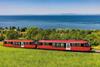





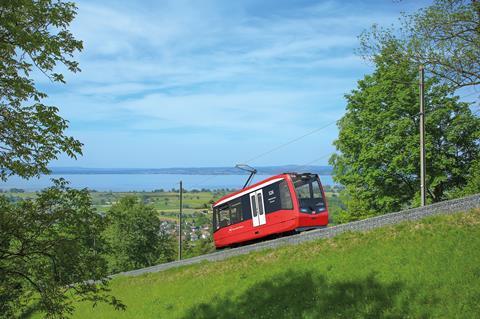
SWITZERLAND: Appenzeller Bahnen has applied to the Federal Office of Transport for permission to convert its 1·96 km Rheineck – Walzenhausen rack-and-adhesion railway to fully automated operation.
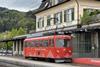
The current BDeh1/2 electric railcar dating from 1958 is reaching the end of its service life, and AB wants to take the opportunity to automate the line. This would reduce operating costs and enable it to run services for longer periods each day.
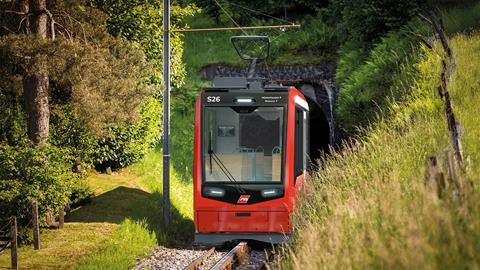
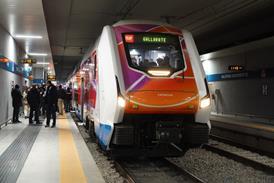
In 2022 Stadler was awarded a contract to supply a new vehicle for the 1 200 mm gauge line, which features a Riggenbach/von Roll rack section between Ruderbach and Walzenhausen with a steepest grade of 26∙3%.
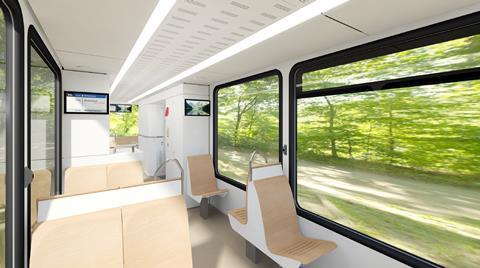
The new railcar will have wooden seats to continue the traditional design from earlier vehicles, but will have a wide entrance to enable wheelchair users to travel unaided. It will also have a large window at the downhill end to provide a panoramic view of the Bodensee.
Stadler said it would be the first fully-automated adhesion and rack-and-pinion railcar for use in an open overland railway environment, rather than in a tunnel or closed network, adding that there was little risk of it encountering an obstacle on the line.
The automation project includes the installation of communication-based train control as well as safety equipment at the stations, two level crossings and along the track. Video surveillance of track, stations and the vehicle will be provided, along with visual and voice communication between the train and control centre.
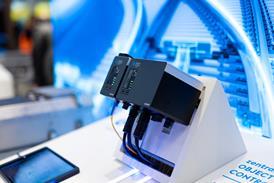
Stadler’s Nova Smartsense collision warning system has been tested on the line for more than a year, while data communication tests have also been completed.

Conversion works are expected to start at the end of 2026 and take around a year. A replacement bus service would be provided while the line is out of use.
The automated service is expected to start in 2027. The vehicle would initially operate with an onboard attendant, before switching to GoA4 unattended operation.