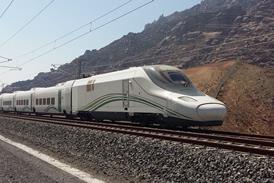











ITALY: Competition authority AGCM has upheld a complaint against infrastructure manager RFI, finding that its procedures for allocating capacity on high speed lines were capable of hindering access to the national rail network and preventing new operators from entering the market.
RFI has now made binding commitments intended to ensure fair, transparent and non-discriminatory access to the high speed rail network. AGCM said this marks ‘a significant step forward for the high speed rail market, since it promotes greater competition through the entry of a third operator’ (after incumbent Trenitalia and open access operator Italo) and ‘creates new opportunities to improve services, quality and competitiveness to the benefit of passengers’.
Paths requested
In 2024 French national railway SNCF’s Italian subsidiary SNCF Voyageurs Italia applied for paths to run four Torino – Venezia return trains per day and nine Torino – Napoli return trains per day from 2026.
These would be in addition to the existing Paris – Milano international service, which is to be reduced to three to two trains per day as the TGV Inoui (formerly TGV M) trainsets that SNCF VI will use on the service will have a higher capacity than the existing TGV Réseau PLT fleet.
However, SNCF VI encountered difficulties in negotiating paths and depot access for the Italian domestic services. It was initially offered only 30% of the paths requested, and a second offer covered only 15%. RFI blamed this on a lack of capacity and grandfather rights.
SNCF VI made a complaint to AGCM in March 2025, triggering an investigation which has taken almost a year to complete.
Binding commitments
On March 6 this year, AGCM announced that it had upheld the complaint, and said that it had accepted binding commitments offered by RFI to address competition concerns.
RFI will assign SNCF VI a minimum of 18 train paths on high speed routes for 10 years, in a move intended to make its entry into the Italian market both effective and sustainable.
In addition, RFI will amend the rules in its network statement to bring them into line with European principles on the efficient use of infrastructure, the protection of passengers’ needs and the promotion of competition. A transitional framework will be adopted immediately to protect the new entrant and any future entrants, granting them priority in the allocation of available or underused capacity to support a gradual and effective expansion of their services.
SNCF welcomes decision
SNCF VI welcomed the decision as ‘a step forward’ but said it was not sufficient to enable the immediate implementation of its full plan; SNCF Voyageurs CEO Christophe Fanichet said last November that he was seeking ‘clear rules and a long-term framework’, including a 15-year agreement with RFI.
The prospective new entrant said it now ‘awaits guarantees on all the commitments necessary’ for joining the Italian domestic market, and it hoped that it could launch operations in September 2027 if the desired paths are made available and agreement reached on access to depots.
Call for EU-wide measures
Commenting on the decision, the AllRail alliance of new entrants told Railway Gazette International that ’in light of the Italian competition authority’s statement, we call for measures across all EU member states that prevent the emergence or abuse of dominant positions in line with Article 102 of the Treaty on the Functioning of the European Union, as part of Commissioner Tzitzikostas’ forthcoming high speed rail plan.
‘Unfortunately, we still see some EU member states shielding their long-distance incumbents from future high speed competition. In Portugal, for example, recent government plans explicitly refer to “preparing incumbent operator CP to assume a dominant position” in high speed rail, including the authorisation to acquire 20 trainsets with €584m in public funding.’
-
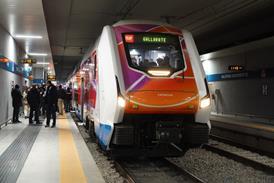
The first of the 15 four-system Alstom TGV Inoui trainsets intended for operation in Italy was tested at Bologna’s San Donato test centre at the end of 2025, but it has yet to be approved for use in the country.