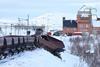









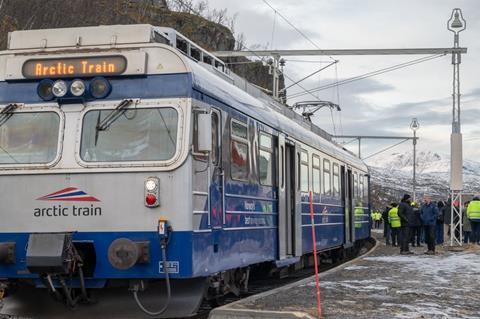
EUROPE: The 473 km railway from Narvik in Norway to Kiruna and Luleå in Sweden has been designated as an Arctic Test Arena. It will be used to test technology in challenging weather conditions.
The aims include improving operational safety, increasing resilience to extreme weather and climate change, promoting innovation and collaboration between industry and academia and making testing facilities more accessible, relevant and cost-effective.

The main partners are Norwegian infrastructure manager Bane Nor and railway agency Jernbandirektoratet, research institute SINTEF, UiT the Arctic University of Norway, Sweden’s Trafikverket and Luelå Railway Research Centre.
‘The Nordic region offers us a unique testing arena’, Jernbanedirektoratet acting director Marit Rønning said when the project was officially launched with a ceremony on November 4. ‘Extreme weather conditions are usually a challenge for the railway, but when we want to test new technologies, large amounts of snow and arctic cold are actually beneficial.’
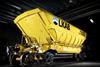
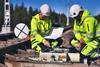
Testing activities are already underway, including sensors for bridge monitoring, digital condition monitoring of trains, wheel profile measurements, detection of ground movements such as landslides and rail defects. The railway infrastructure is being monitored using optical fibres, enabling measurement of track geometry and forces, and facilitating testing of rails and sleepers with trains with axleloads up to 32·5 tonnes. This is higher than the line’s current 31 tonne standard for iron ore trains and significantly higher than the 22·5 tonne maximum on much of the European rail network.
Jernbandirektoratet noted ‘if it works here, it works everywhere‘.