









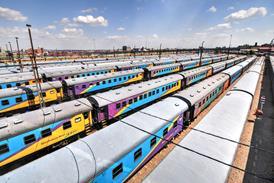
This week’s round-up of news from the urban transport sector.
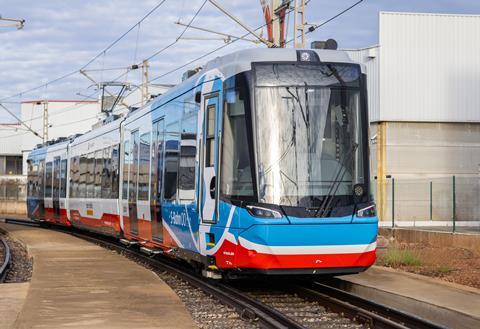
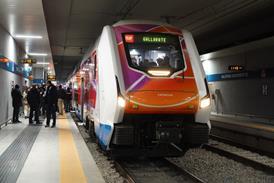
On March 17 Linz operator Schiene Oberösterreich unveiled the first of 20 Stadler LRVs it has ordered within a framework contract for the supply of up 504 tram-trains agreed by a consortium of six German and Austrian transport bodies in 2022. Equipped for 750 V DC and 15 kV 16·7 Hz operation, the 1 435 mm gauge vehicle has 94 seats and space for 134 standing passengers.
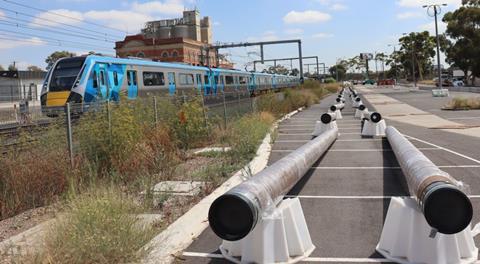
Utility relocation works have started for Melbourne’s Sunshine Superhub project, aimed at untangling various junctions over a 6 km section of the suburban network between West Footscray and Albion to separate traffic flows. New tracks will be added, and existing ones reconfigured, while all of the signalling will be renewed. The project requires the construction of two railway flyovers and an underpass. New stations are to be built at Albion and Tottenham, while two new platforms will be constructed at Sunshine where the concourse will be extended. As well as increasing reliability, the project will add capacity to accommodate future airport link services. Completion is envisaged by 2030.
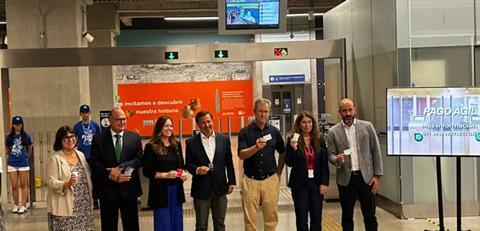
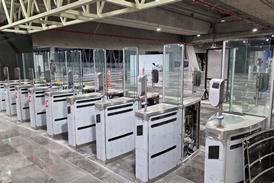
The Pago Ágil contactless payment system accepting contactless bank cards, digital wallets and smartwatches has been launched on the Santiago metro network and the Santiago – Nos suburban railway. A further roll-out to the capital’s buses is planned by the end of the year.
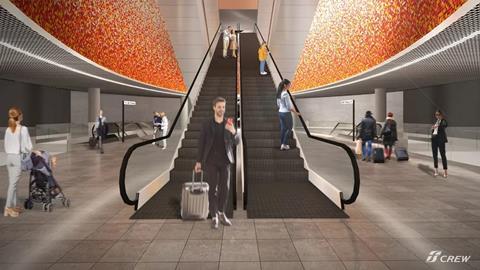
On March 30 Napoli regional transport operator EAV formally signed the €660m Lot 1A civil works design and construction contract covering the first 6·5 km section of driverless metro Line 10. A consortium of Webuild, Eteria Consorzio Stabile, Costruire Icm and Metropolitana di Napoli had been selected for the project at the end of last year. The consortium also has the exclusive right to build extensions totalling 7·3 km which would take the line into the city centre and outward to the Napoli-Afragola high speed station, taking the total value of the package to more than €1·7bn. Webuild Chief Executive Pietro Salini said Napoli, ‘with its art stations and numerous others works we are helping build’, was ‘demonstrating how major infrastructure projects can become engines of urban regeneration and beauty, creating employment for the local area’.
The Glasgow Subway is now using Scheidt & Bachmann technology to accept contactless Pay As You Go payment by debit or credit card or mobile wallet, with daily and Monday to Sunday price caps. Existing Subway ticket and payment options will remain available until further notice, including cash payment at ticket offices and ticket vending machines. People who wish to pay for two or more passengers will still need to use these methods, as only one customer can travel using a contactless PAYG on a single payment card.
Novosibirsk Oblast and the city administration have approved 2·5bn rouble of funding for the purchase, modernisation and overhaul of metro rolling stock this year. Of this, 2·09bn will come from the regional budget.
The UK’s Light Rail Safety & Standards Board has strengthened ties with the British Standards Institute through closer collaboration and participation in the BSI’s Railway Applications Committees and working groups. ‘Our ongoing partnership with the BSI is increasing the sector’s presence and influence in the development of future standards that may have an impact on light rail’, said LRSSB Standards Manager Matthew Wright on March 26. ‘By ramping up sector participation, we can ensure operators and other stakeholders are better represented and informed. By improving visibility of emerging standards and alterations, we can also reduce the risk of the sector being unaware of any changes, while supporting more proactive, coordinated responses.’
Construction of the ‘Troitskoye’ metro depot has begun in Moskva, on a 26·7 ha site which is set to become the largest facility in Russia. The project will see the erection of 11 buildings, including a production and administrative block totalling 100 000 m². Completion is scheduled for 2029.