







FRANCE: Former Prime Minister and RATP Chief Executive Jean Castex promised to ‘fix the foundations’ of the SNCF house on October 29 as he was confirmed in the role of President of the national railway holding group.
A noted rail advocate who has written books on railway history, Castex succeeds Jean-Pierre Farandou, who has joined President Emmanuel Macron’s cabinet as minister for work and pensions. Castex applied for the role as head of SNCF in 2019, before his two-year stint as Prime Minister and a further three years at RATP.
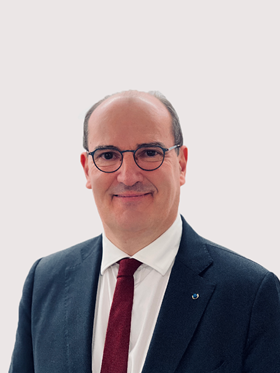
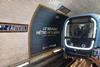
Speaking to members of the Assemblée Nationale as part of the appointment confirmation process, Castex said he was leaving the Paris municipal operator with ‘a degree of sadness’. However, he pointed to some important achievements in his tenure, including the acceptance of the first of up to 410 MF19 metro trainsets and the opening up of the city’s bus network to competition.
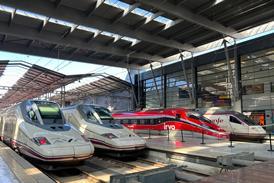
Adjusting to a competitive landscape was one of the main themes of his presentation to parliamentarians as he looked ahead to his leadership of the national railway. Insisting that ‘equal rules must apply to all players in the market, including SNCF’, he reiterated a familiar refrain among incumbent operators that new entrants to the passenger market were choosing only to target the most profitable routes, leaving SNCF to manage ‘the territorial integrity of the network’. He then doubled down on SNCF’s international expansion of recent years, noting that ‘if operators from neighbouring countries want to come and take a slice of our rail market, why should we also not take a slice of theirs?’.
More and better trains
Nevertheless, he also accepted that there was much that SNCF ‘could do better’, as he set out a vision for ‘more and better’ trains across the country. He lamented that the operator was ‘turning away lots of people’ from its passenger services because of a shortage of rolling stock. He was critical of the supply chain, noting that both RATP and SNCF had seen new train orders completed late, and he urged their industrial partners to ‘get moving’ to address the issue.
He also raised concerns about liberalisation of the ticketing market, insisting that SNCF would continue to use its scale ‘to ensure passengers are not faced with complexity and confusion’ when trying to understand the retail offers available. However, he said SNCF itself had much more to do to ensure passengers were better informed, especially at times of journey disruption.
Punctuality task force
Reflecting on his work at RATP to address reliability on RER Line B, Castex promised a rapid set of interventions to improve service quality on the 20 least punctual passenger routes in France. These would be intended to deliver improvements without needing to wait for major infrastructure enhancements or new rolling stock.
One of the first operational visits he plans to make will be to the loco-hauled inter-city service between Paris and Clermont-Ferrand, while he also pledged to look again at options for domestic overnight trains to use high speed lines when conventional routes are closed for engineering possessions.
He also promised to support the ongoing efforts to restructure the rail freight sector to boost its competitiveness.
Addressing infrastructure frailty
However, Castex saved arguably his strongest comments for the state of France’s rail infrastructure. Referring to the permanent way as ‘the foundations of the house’, he said he faced ‘the mother of all battles’ to bring the network back to an acceptable state of quality. ‘Without a high quality network, we cannot do anything’, he added.

He promised to lobby for the annual funding settlement for enhancements to be raised from €3bn per annum currently to €4·5bn, with the SNCF group itself funding €500m of that increase. But he repeated calls made by Farandou over the past year that ‘innovative financing mechanisms’ would be needed to find the remaining €1bn.
Returning to the topic of market opening, Castex also reiterated his belief that maintenance of rolling stock ‘is a specialist task with specific know-how’ which should remain a key element of SNCF’s business. ‘We must not break methods that work’, he insisted.